
You’re in H-1B status. Everything about your case is valid. Your I-94 is current, but your visa stamp expired a while ago because you haven’t traveled outside the U.S. to get it renewed.
That same passport gets you through TSA without any issues. Your employer accepts it for Form I-9. But then you walk into the DMV to renew your driver’s license, and suddenly you’re told that it doesn’t count as valid proof of identity.
Sounds confusing, right?
Well, this isn’t just a hypothetical situation. It’s happening right now, particularly in Texas, and similar issues are starting to come up in other states as well.
The reason goes back to an old and rarely discussed federal regulation tied to the REAL ID Act.
So, what’s actually happening here? Why is the legal reasoning behind this being questioned? And, more importantly, what should you do if you’re an H-1B holder and the DMV is giving you a hard time?
The Whole Problem, In One Sentence
The federal REAL ID regulation (6 C.F.R. § 37.11) says a foreign passport only counts as an identity document if it has an unexpired visa stamp attached. But that same federal government accepts a passport with no visa requirement at all for TSA screening and for I-9 employment verification. Same agency, two completely different standards – and that contradiction is the entire case.
The Law and the Regulation Aren’t Saying the Same Thing
It helps to separate what Congress actually wrote from what the agency later did with it.
The REAL ID Act itself treats identity and immigration status as two separate questions:
- For identity, the statute just requires a photo identity document (like a passport), or a non-photo document that includes full legal name and date of birth.
- For status, a separate provision requires proof of a valid nonimmigrant visa or valid nonimmigrant visa status.
Notice that word “or.” Congress clearly understood that a visa document and a person’s underlying status are two different things, and that proving either one should be enough.
DHS’s regulation collapsed that distinction. It folded the status requirement into the identity requirement, so now a visa stamp effectively decides whether your passport counts as proof of who you are – something Congress never asked for.
When One Agency Sends Two Different Signals
Here’s where it gets hard to defend. The federal government accepts a foreign passport, with no visa attached, in the two situations where identity verification arguably matters most.
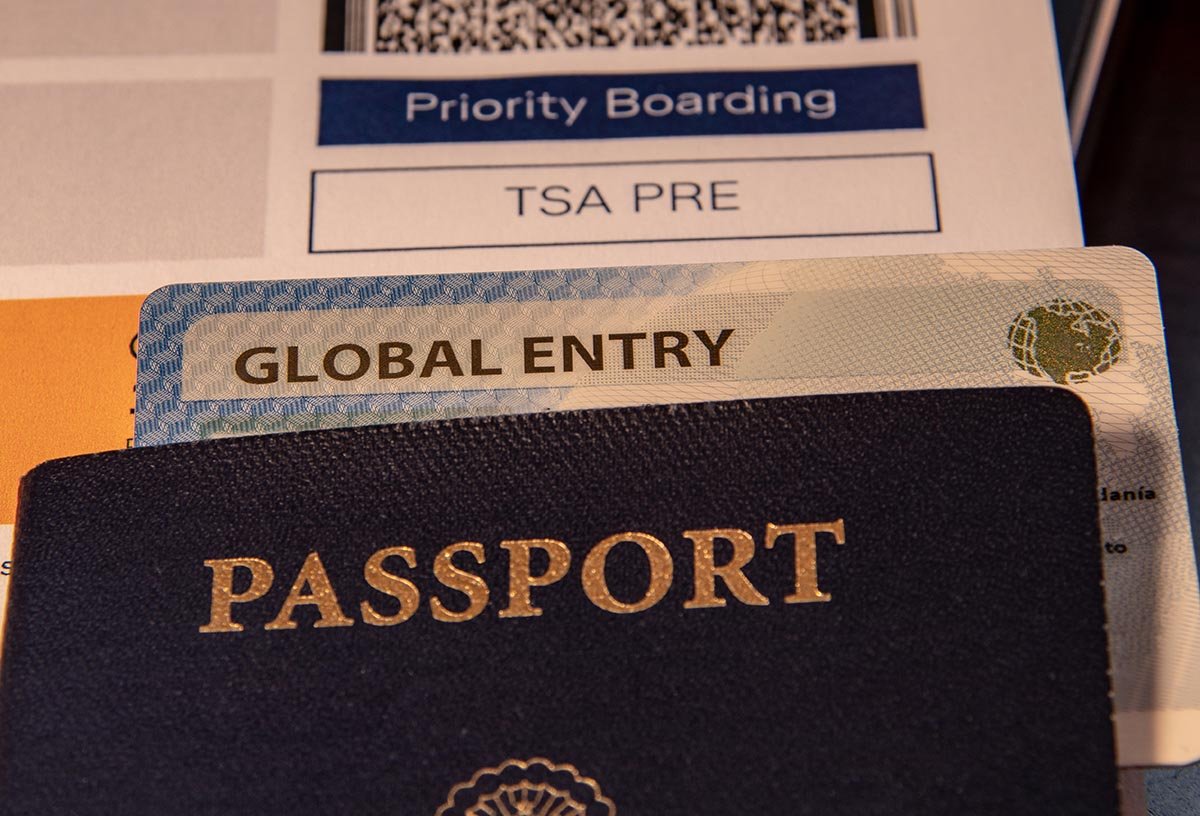
At the airport: TSA’s list of acceptable IDs includes a foreign passport, full stop – no visa, no I-94. Since May 2025, that’s one of the accepted alternatives to a REAL ID-compliant license for boarding a domestic flight.
On Form I-9: USCIS’s List A documents also accept a foreign passport paired with a Form I-94 that shows nonimmigrant status – again, no visa required. That combination proves both identity and work authorization at once, which is actually a higher bar than REAL ID asks for.
So the same H-1B employee whose expired visa stamp gets her turned away at the DMV can use that identical passport to clear airport security and start her job the same week. Same document, same government, opposite conclusions.
DHS Has Basically Admitted This Itself – Twice
The strange part is that DHS has, in its own words, already undercut its own rule.
Back in the 2007 rulemaking, the agency wrote that a visa’s expiration date has no bearing on how long someone is authorized to stay in the country. In other words, DHS already knew that an expired stamp tells you nothing about whether a person is currently in status – that’s what the I-94 and the SAVE database are for.
Then in 2019, DHS carved out an exception for citizens of the Marshall Islands, Palau, and Micronesia, allowing them to use a passport plus an I-94 as identity proof with no visa required at all. The justification given was the unique diplomatic relationship with those countries – not anything about identity verification. Which means DHS already accepted, in practice, that a passport and an I-94 are sufficient. It just limited that logic to a small group instead of applying it consistently.
What About People Who Were Never Given a Visa Stamp?
This isn’t only about expired visas. Some lawfully present nonimmigrants – Canadian TN professionals, for example – were never required to get a visa stamp in the first place. Read literally, the regulation leaves them with no qualifying identity document at all.
DHS actually flagged this exact gap back in 2007 and asked the public for comments on it. That gap was never closed in the final rule. States like Texas currently paper over it with informal workarounds that aren’t written into the federal regulation anywhere — which means they could disappear at any time.
What’s Happening in Texas Right Now
Texas’s Department of Public Safety proposed an amendment earlier this year that would have removed the word “expired” from its rule, requiring a strictly unexpired visa. The public comment period closed on July 26, 2026.
For now, Texas DPS’s website suggests some relief – reportedly, DHS informally confirmed that an expired visa stamp can still be accepted if lawful presence is verified through the SAVE database. But that’s informal guidance. It was never published in the Federal Register, and the regulation’s actual text hasn’t changed. That relief could be pulled back just as informally as it was granted.
If This Is Affecting You
If your visa stamp has expired, or you fall into a visa-exempt category, and you’re running into trouble at the DMV, a few steps are worth taking now:
- Get any denial documented. If your application is rejected, ask for it in writing, or at minimum note the date, office location, and the exact reason given.
- Hold onto your paperwork. Your passport’s biographic page, current Form I-94, most recent Form I-797 approval notice, and any prior state license.
- Apply while your visa stamp is still valid. If you’re moving to or already living in Texas, try to get your license before your stamp expires. A Texas license that hasn’t been expired more than two years can itself serve as a primary identity document going forward.
- Consider getting a state ID card, even if you’re not driving yet — it creates the same fallback option.
- Keep checking for changes. Since the current relief is informal, confirm requirements before you go and take screenshots of the DPS page the day you apply.
Where This Might Be Headed
Immigration attorneys are exploring several legal theories to challenge the regulation – that DHS exceeded its statutory authority, that the rule is arbitrary given DHS’s own past statements, and that a gap DHS identified back in 2007 was simply never fixed. Several firms are actively collecting information from affected individuals to help build that case.
If this is affecting you or someone you know, keeping a careful record of what happened is the most useful thing you can do right now, since how this plays out at the federal level is still very much unsettled.
Conclusion
At the end of the day, this comes down to one basic inconsistency: the same federal government that trusts your passport to get you through airport security and onto your employer’s payroll doesn’t trust it to get you a driver’s license, all because of a visa stamp that DHS itself has admitted doesn’t tell you anything about your current status. That’s not a small technicality – for people caught on the wrong side of it, it means not being able to drive to work, take a kid to school, or get to a doctor’s appointment.
Until the regulation itself is fixed or successfully challenged, the safest move is to stay ahead of it: apply or renew before your visa stamp expires, keep every document that proves your status, and get any denial in writing. If you’re dealing with this right now, don’t wait it out quietly – talk to an immigration attorney and get your situation on record while the law is still being worked out.
Quick Answers (FAQ)
Why is a passport being rejected as identity proof under REAL ID?
Some states apply 6 C.F.R. § 37.11 literally, which requires a foreign passport to have an unexpired U.S. visa stamp attached — even if the applicant’s underlying immigration status is fully valid.
Is the passport requirement the same for TSA and for the DMV?
No. TSA accepts a valid foreign passport with no visa requirement at all. The REAL ID identity regulation, read literally, also requires an unexpired visa stamp — that mismatch is the core of the problem.
What should I do if my visa stamp expired but my status is still valid?
Keep your Form I-94, latest I-797 approval notice, and passport ready. Try to apply for or renew your license while your visa stamp is still valid, and get any denial in writing.
Are visa-exempt nonimmigrants, like Canadian TN professionals, affected too?
Yes. People who were never required to hold a visa stamp are left, under a literal reading of the regulation, with no qualifying identity document at all — a gap DHS itself flagged back in 2007.
Is this only a Texas problem?
Most reported cases so far are in Texas, but since every state applies the same federal regulation, similar issues could surface elsewhere.