
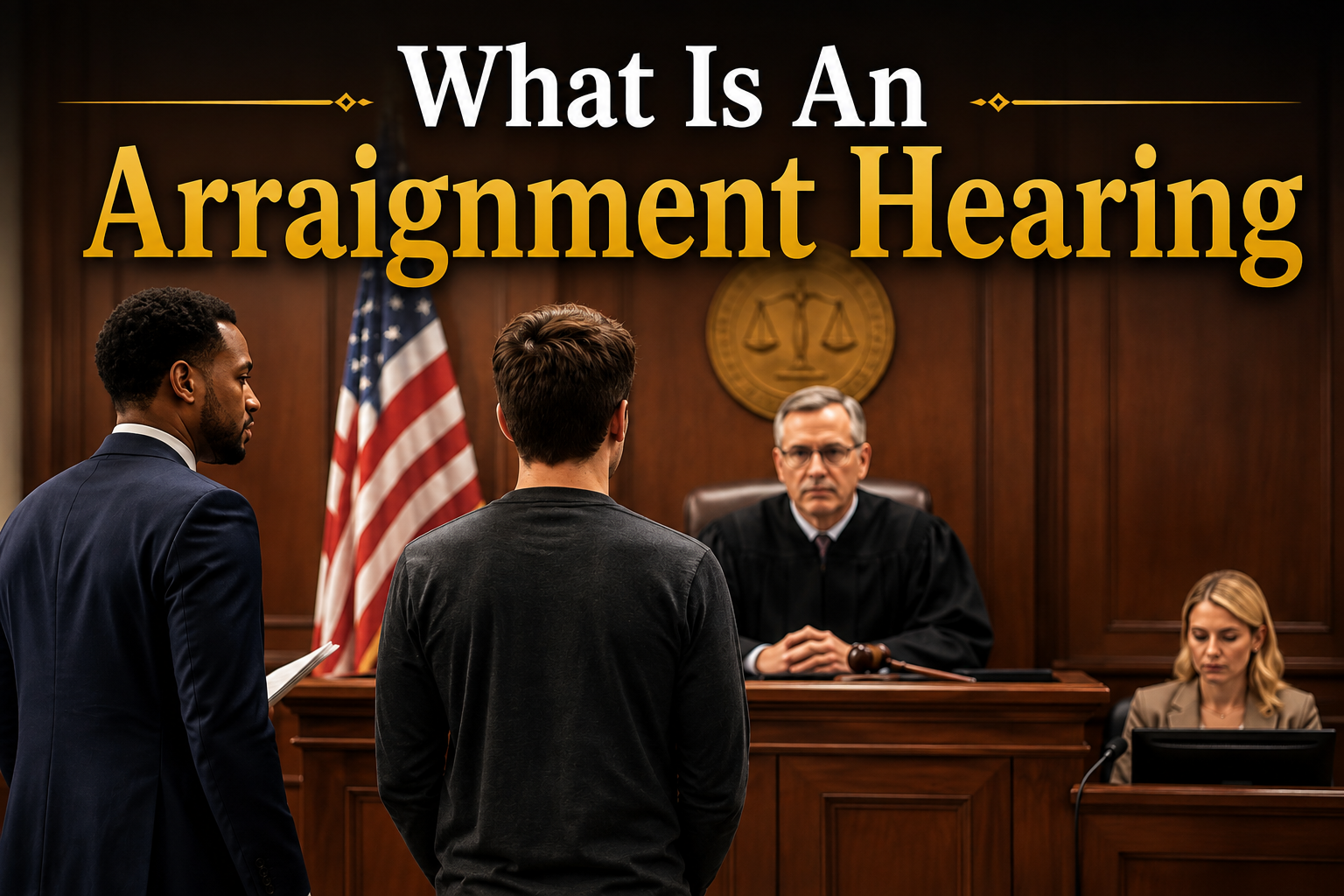
If you or someone you love has an upcoming court date and you’re trying to figure out what to expect, you’re probably asking yourself: what is an arraignment hearing, exactly? In simple terms, an arraignment hearing is a defendant’s first formal appearance in criminal court, where the charges are read, legal rights are explained, and the defendant typically enters a plea. It’s usually the starting point of the criminal court process, not the end of it.
For most people, this is unfamiliar territory. Understanding what happens – and what doesn’t happen – at this stage can make a stressful moment feel a little more manageable.
What Is an Arraignment Hearing?
An arraignment hearing is a defendant’s first formal court appearance after being charged with a crime. At this hearing, the court informs the defendant of the charges, explains certain legal rights, and generally asks the defendant to enter a plea. It also sets the stage for what comes next in the case.
Arraignments generally happen shortly after an arrest or after formal charges are filed, though the exact timing depends on the jurisdiction and whether the person was taken into custody. The hearing itself is often brief – sometimes just a few minutes – but it plays an important role in the overall criminal case.
During an arraignment, a defendant can typically expect to:
- Hear the specific criminal charges against them
- Be reminded of certain constitutional rights
- Discuss legal representation, if they don’t already have an attorney
- Enter a plea (guilty, not guilty, or in some jurisdictions, no contest)
- Have bail or release conditions addressed
- Receive a date for the next court proceeding
Because criminal procedure varies from state to state – and sometimes from county to county — the exact sequence of events at an arraignment hearing can differ somewhat depending on local court rules.
What Happens at an Arraignment Hearing?
While the details vary by jurisdiction, most arraignment hearings follow a similar general pattern. Here’s what typically happens during an arraignment hearing, step by step:
- Appearing before the court. The defendant appears before a judge, either in person or sometimes by video, depending on the court and the circumstances of the case.
- Hearing or confirming the charges. The court reads or confirms the criminal charges filed against the defendant, so there’s a clear record that the person understands what they’re accused of.
- Understanding legal rights. The judge typically reviews certain rights, such as the right to an attorney and, in many cases, the right to remain silent.
- Addressing legal representation. If the defendant doesn’t already have a lawyer, the court may ask whether they plan to hire one or whether they’d like to be considered for a public defender.
- Entering a plea. The defendant is generally asked how they plead to the charges – guilty, not guilty, or, in jurisdictions that allow it, no contest.
- Addressing bail, bond, or release. The court may decide whether the defendant will be released, what conditions apply, or whether bail or bond is required.
- Determining the next court date or proceeding. Before the hearing ends, the court usually sets a date for the next step in the case, such as a pretrial hearing.
Again, this order and structure can shift depending on the jurisdiction, the type of charge, and whether the defendant is in custody at the time of the hearing.
What Pleas Can You Enter at an Arraignment?
One of the central moments of an arraignment hearing is entering a plea. Generally, there are a few options, though availability can depend on local law and the nature of the charges.
Guilty. A guilty plea is an admission that the defendant committed the offense as charged. This can move the case toward sentencing, depending on the jurisdiction and the type of case.
Not guilty. A not guilty plea means the defendant disputes the charges and wants the case to proceed through the normal court process, which may include pretrial hearings, negotiations, or eventually a trial.
No contest (nolo contendere), where permitted. A no contest plea means the defendant isn’t admitting guilt outright, but also isn’t disputing the charges. Not every jurisdiction allows this option for every type of offense.
This article is meant to explain these options in general terms – not to tell you which plea is right for your situation. That decision depends on the specific facts of your case, the charges involved, and factors that a criminal defense attorney would typically review with you before you decide anything.
What Happens With Bail or Bond at an Arraignment?
Bail and release decisions are often addressed at the arraignment, and this is an area where outcomes can vary widely based on jurisdiction and individual circumstances.
Bail is an amount of money (or property) that may be required to secure a defendant’s release while the case is pending.
Bond often refers to an arrangement, sometimes involving a bail bond company, where a smaller fee is paid to cover a larger bail amount.
Release on recognizance (ROR) means the defendant is released without paying bail, based on a promise to appear at future court dates.
Pretrial detention may apply in some cases, meaning the defendant remains in custody while the case moves forward.
Conditions of release – such as travel restrictions, check-ins, or no-contact orders – may also be set as part of any release decision.
Courts generally weigh several factors, including the type of charges, the defendant’s criminal history, ties to the community, and flight risk. Because these factors are assessed differently across jurisdictions, there’s no single, universal outcome you can expect at every arraignment.
Do You Need a Lawyer at an Arraignment Hearing?
This is one of the most common questions people have before their first court date, and it’s a reasonable one to ask.
While it’s technically possible to appear at an arraignment without a lawyer, many people find it valuable to have legal representation as early as possible in the process. A criminal defense attorney may help with:
- Understanding the specific charges filed against you
- Protecting your legal rights during the hearing
- Advising you on the potential consequences of different plea options
- Addressing bail or release conditions
- Reviewing the prosecution’s allegations early in the case
- Identifying possible defenses or issues worth investigating
- Preparing for what comes next in the criminal court process
At Orange Law, Attorney Karan Joshi works with individuals who are trying to understand what an arraignment means for their specific situation and what steps may make sense going forward. Speaking with a criminal defense attorney before or shortly after an arraignment can help someone make more informed decisions during a process that can otherwise feel overwhelming.
What Are Your Rights at an Arraignment?
Defendants generally have certain rights at an arraignment hearing, although the specific application of these rights can depend on the jurisdiction and the nature of the case. These commonly include:
- The right to legal representation – either through a private criminal defense attorney or, in many jurisdictions, a court-appointed public defender if eligible.
- The right to understand the charges – the court is generally expected to make sure the defendant knows what they’re being accused of.
- The right to remain silent, where applicable – defendants are typically not required to explain or defend themselves at this stage.
- The right to due process – meaning the case must proceed according to established legal procedures.
- Rights related to release or detention – including, in many cases, the opportunity to be heard on bail or release conditions.
Because these rights can be applied differently depending on state law and the specifics of a case, this section should be treated as general information rather than a complete legal rundown of every right a defendant may have.
Can Charges Be Dismissed at an Arraignment?
This is a common question, and the honest answer is: usually not, though it does depend on the situation. An arraignment is generally not designed to function as a trial or a dismissal hearing. Its primary purpose is to formally notify the defendant of the charges, address legal representation, and take a plea.
That said, there are limited circumstances – depending on the jurisdiction, the strength of the charges, or procedural issues – where a case might be dismissed or a charge reduced early in the process. These situations tend to be case-specific and aren’t the norm. If you’re hoping to understand whether early dismissal might be possible in your case, that’s a conversation better suited for a defense attorney who can review the actual facts and charges involved.
What Happens After an Arraignment?
An arraignment hearing is generally just the beginning of the criminal court process, not the end. Depending on the plea entered and the jurisdiction, the case may proceed through several additional stages, such as:
- Discovery – where both sides exchange evidence and information related to the case
- Pretrial hearings – additional court dates to address procedural or evidentiary issues
- Motions – legal requests filed by either side, such as motions to suppress evidence
- Plea negotiations – discussions between the defense and prosecution about potential resolutions
- Additional court appearances – as the case moves forward
- Trial preparation – if the case is heading toward trial
- Trial – if the case isn’t resolved beforehand
- Sentencing – if there’s a conviction or a guilty/no contest plea
Understanding where the arraignment fits into this bigger picture can help reduce some of the uncertainty that comes with a first court appearance.
What Should You Bring to an Arraignment Hearing?
Being prepared can help the process go more smoothly. Generally, it’s a good idea to bring:
- Your court notice or summons
- A valid form of identification
- Contact information for your attorney, if you have one
- Any relevant paperwork related to your case
- A list of questions you want to ask your attorney or the court
What Should You NOT Do at an Arraignment?
A few practical habits can help you avoid unnecessary complications during this stage of the process:
- Don’t ignore your court date. Missing an arraignment can lead to additional legal consequences.
- Don’t try to argue the entire case in court. An arraignment isn’t the venue for presenting your full defense.
- Avoid volunteering unnecessary information. It’s generally best to let your attorney guide what’s said in court.
- Avoid discussing the details of your case publicly.
- Be cautious about posting details on social media. Statements made online can sometimes become part of the record.
- Don’t make major plea decisions without understanding the consequences. Take the time to understand your options before deciding how to plead.
These aren’t meant to alarm you – they’re simply practical points that can help you avoid common missteps.
Frequently Asked Questions
What is an arraignment hearing?
An arraignment hearing is a defendant’s first formal court appearance after being charged with a crime. The court reads the charges, explains certain rights, and generally asks the defendant to enter a plea. It’s typically an early step in the criminal case process, not a final resolution.
What happens at an arraignment?
At an arraignment, the court generally confirms the charges, reviews the defendant’s rights, addresses legal representation, and asks for a plea. Bail or release conditions may also be discussed, and the court usually sets a date for the next hearing before the appearance concludes.
Do you have to plead guilty at an arraignment?
No. A guilty plea is one option, but defendants can generally also plead not guilty or, in some jurisdictions, no contest. The right plea depends on the specific facts and charges involved, which is why many people choose to speak with an attorney beforehand.
Can you plead not guilty at an arraignment?
Yes, pleading not guilty at an arraignment is common. It generally means the case will continue through the normal court process, which may include pretrial hearings, negotiations, or eventually a trial, depending on how the case develops.
Can charges be dismissed at an arraignment?
Generally, no – an arraignment isn’t designed to function as a dismissal hearing or trial. In limited situations, depending on jurisdiction and case specifics, early dismissal or reduction may be possible, but this isn’t the typical outcome at this stage.
Do you need a lawyer for an arraignment?
It’s not always legally required, but many people find it valuable to have a criminal defense attorney involved as early as possible. An attorney can help explain the charges, protect your rights, and advise you on plea and bail decisions.
Can you go to jail at an arraignment?
It’s possible, depending on the case. Some defendants are released on bail, bond, or their own recognizance, while others may remain in custody if the court determines pretrial detention is appropriate based on the charges and other factors.
What happens after an arraignment hearing?
After an arraignment, a case generally moves into further stages such as discovery, pretrial hearings, motions, and possibly plea negotiations. If the case isn’t resolved beforehand, it may proceed toward trial and, if applicable, sentencing.
Facing an Upcoming Arraignment?
Walking into court for the first time can feel overwhelming, especially when you’re not sure what to expect or what decisions you might be asked to make. If you or someone you know has an upcoming arraignment or is facing criminal charges, it may help to talk through your situation with someone who handles these cases regularly.
Orange Law and Attorney Karan Joshi work with individuals navigating the criminal court process and can help you understand your options based on the specific facts of your case. Reaching out before your court date – rather than after – often gives you more time to prepare and make informed decisions.