
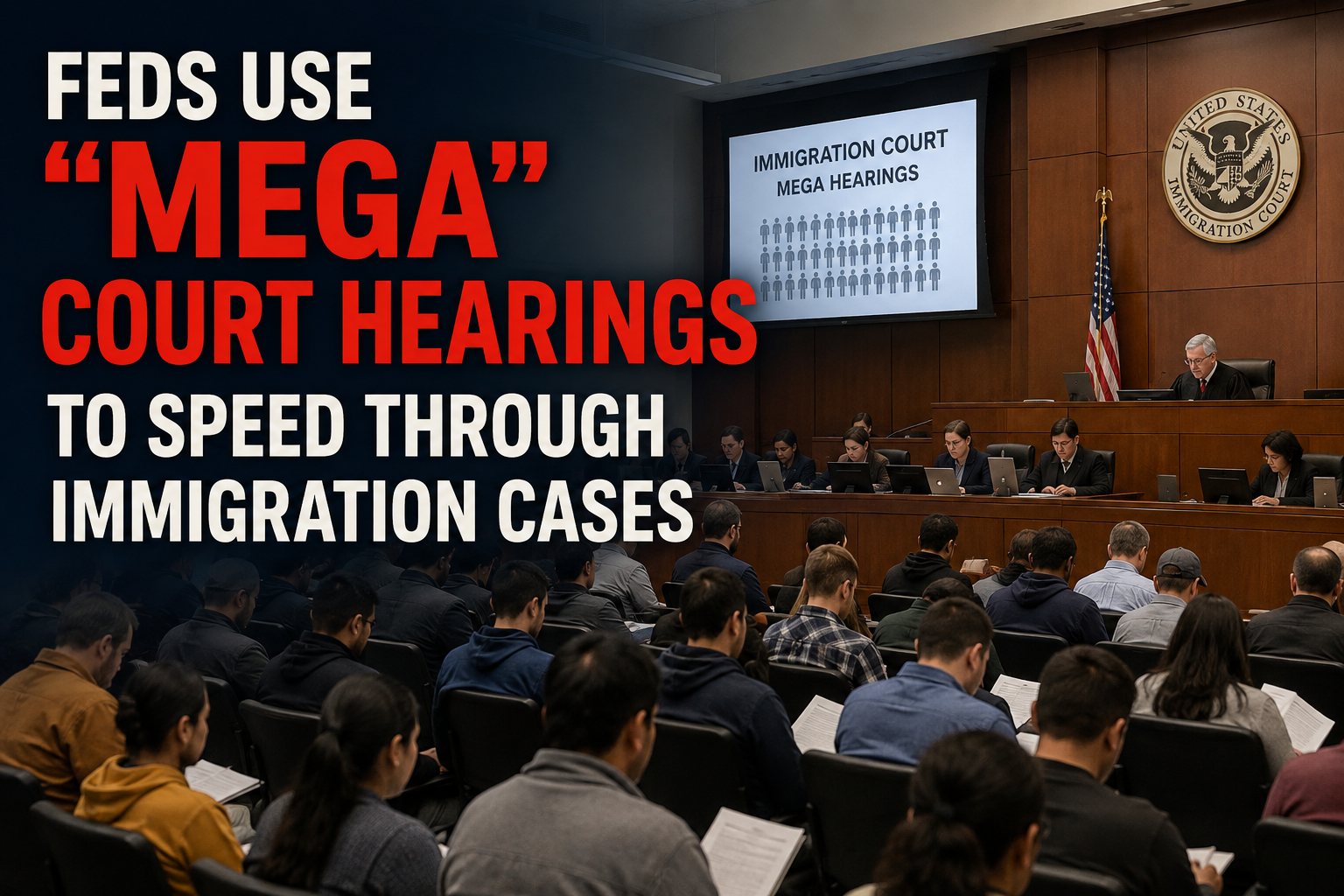
Immigration courts across the country are now scheduling dozens of cases-and sometimes even more than 100 cases-in front of a single judge on the same day. These sessions are often referred to as “mega” hearings or “mega master” hearings. They are part of a broader federal effort to move immigration cases through the court system more quickly and reduce a backlog that has built up over several years.
If you or a family member has a pending immigration case, this change is something you should pay attention to. A faster court schedule can mean less time to prepare, shorter notice in some situations, and more pressure to be ready when your hearing date arrives. And, honestly, when you’re dealing with an immigration case, being unprepared can make an already stressful situation even harder.
So, what exactly is a mega immigration court hearing? Why are courts using them? And what should you do if you have an upcoming hearing?
In this article, we’ll break it all down in simple terms and explain what people with pending immigration cases should know before they walk into court.
What Are Mega Court Hearings?
Mega court hearings are immigration court sessions where a judge handles far more cases than usual in a single day. In some courts, judges may be scheduled to hear 50, 90, or even more than 100 cases in one day.
Most of these are master calendar hearings, which are generally short, preliminary appearances rather than full, trial-style hearings.
Normally, an immigration judge might handle a few dozen master calendar cases in a day. With the mega hearing approach, that number has increased significantly in many immigration courts across the country. The idea, according to federal officials, is pretty straightforward: move cases through the system faster and help reduce the growing immigration court backlog.
But there’s an important distinction to keep in mind. A master calendar hearing and an individual hearing are not the same thing.
A master calendar hearing is usually more of an administrative check-in. The judge may review the status of the case, discuss the next steps, address deadlines, and schedule future proceedings. It is generally not the hearing where the judge makes the final decision on whether someone can stay in the United States.
An individual hearing, on the other hand, is the more detailed proceeding where the person has an opportunity to present evidence, testimony, and legal arguments in support of their immigration case.
So, when you hear the term “mega court hearing,” it’s important to understand that these sessions have primarily involved the master calendar stage of immigration proceedings. They are designed to process a large number of cases quickly, but that does not necessarily mean every case is being fully decided on that day.
Why Are Immigration Courts Using Mega Hearings?
The Immigration Court Backlog
Immigration courts have faced a substantial backlog of pending cases for years. Millions of cases have accumulated across the system, with some individuals waiting years between hearings. This backlog affects nearly everyone in immigration proceedings, including people with strong claims to remain in the United States.
A Push for Faster Case Processing
Federal officials have described mega hearings as an efficiency measure. Reporting on this trend has connected the increase in large-scale dockets to a broader effort by federal immigration authorities to reduce pending caseloads and move cases toward resolution more quickly. Courts have also added more immigration judges in an effort to work through the backlog.
Scheduling Speed Is Not the Same as a Final Decision
It’s worth separating two different things: how quickly a case is scheduled and how a case is ultimately decided. Mega hearings change the pace and format of scheduling, particularly at the master calendar stage. They do not change the underlying immigration laws, standards of proof, or defenses that may apply to an individual’s case. A case can still be continued, transferred, or scheduled for a full individual hearing depending on the circumstances.
How Do Mega Court Hearings Work?
While practices vary by court, several features have been consistently reported:
- Large dockets. A single immigration judge may be scheduled to hear a large number of cases in one morning or afternoon session.
- Shortened notice. Some courts have moved hearing dates up significantly, giving people less lead time than was previously typical.
- Brief individual attention. With so many cases on a single docket, judges may have only a few minutes to address each case during that session.
- Administrative focus. These hearings are often master calendar hearings, used to confirm basic case information, address pleadings, and set the case’s next steps.
- Consequences for non-appearance. If a person does not appear for a scheduled hearing, an immigration judge may issue an order of removal in that person’s absence.
The exact process can vary by courthouse, by judge, and by the procedural posture of the individual case. Some cases may be continued for further proceedings, while others may move toward a different stage more quickly. Because immigration court procedures are set by law and by each court’s local practices, there is no single universal experience for every mega hearing.
How Could Mega Hearings Affect Immigrants?
People with pending immigration cases may notice several practical effects from this scheduling shift:
- Faster case scheduling. Hearings that might once have been set months or a year out may now be scheduled with only days or weeks of notice.
- Less time to prepare. Shorter notice periods can make it harder to gather documents, secure an attorney, or arrange interpretation and travel to court.
- Greater importance of tracking deadlines. With compressed timelines, missing a notice or misunderstanding a hearing date carries more risk than before.
- Potentially faster movement through the system. Cases may reach later procedural stages more quickly than under the prior, slower-moving calendar.
- Different impact depending on representation. How someone experiences a mega hearing, and what options they have during it, can depend heavily on whether they have legal representation and what forms of relief or defenses may apply to their situation.
None of these effects guarantee a particular outcome. They describe how the process itself has changed, not how any individual case will be resolved.
Does a Mega Hearing Mean Someone Will Be Deported?
No. A mega hearing, by itself, does not mean a person will be ordered deported. A mega hearing is typically a scheduling format for a master calendar hearing, which is a procedural step in a case, not automatically a final removal order.
That said, the stakes at a mega hearing are real. If a person fails to appear for a hearing they were properly notified about, an immigration judge can order removal in absentia. Reporting on mega hearings has noted that missed appearances tied to this faster scheduling have contributed to a rise in these in-absentia orders in some courts. This is why understanding your hearing notice and appearing on your scheduled date is critical.
Beyond attendance, the outcome of any immigration case still depends on factors such as:
- The specific immigration laws that apply to the case
- Whether the person qualifies for any form of relief from removal
- The evidence and documentation presented
- The procedural history of the case
- The individual judge’s rulings on legal issues raised
Because so many variables affect a case’s outcome, general information like this cannot predict what will happen in any specific matter.
What Should You Do If You Have an Upcoming Immigration Court Hearing?
If you have a hearing scheduled, or believe you may have one, consider these general steps:
- Check your hearing information. You can check your immigration court case status and hearing date through the Executive Office for Immigration Review’s automated case information system or online portal.
- Review any notices carefully. Read the date, time, and location listed on any Notice to Appear or hearing notice, and note the court’s address precisely.
- Gather relevant documents. Collect identification, prior immigration paperwork, and any documents related to your case history.
- Understand what type of hearing you have. A master calendar hearing and an individual (merits) hearing serve different purposes, and knowing which one you have can help you understand what to expect.
- Seek qualified legal advice. An immigration attorney can review your specific notice, case history, and options.
- Do not ignore a hearing notice. Failing to appear can lead to an in absentia removal order, even if the case involved a scheduling error or short notice.
When Should You Talk to an Immigration Attorney?
Legal guidance can be particularly valuable when:
- You’ve received a hearing notice with a date that is soon, or that conflicts with your existing schedule
- You’re unsure what type of hearing you’re facing or what will happen at it
- You believe you may qualify for a form of relief from removal, such as asylum, cancellation of removal, or another protection
- You don’t currently have legal representation and a hearing is approaching
- You’ve missed a hearing or received an in absentia removal order and want to understand your options
- You have questions about how a faster court calendar may affect your specific case timeline
An attorney can review the specific facts of a case and the applicable law, which general articles like this one cannot do.
How Orange Law Can Help
Orange Law helps individuals and families understand their options when dealing with immigration court proceedings, including cases affected by faster scheduling practices such as mega hearings. Attorney Karan Joshi and the Orange Law team take the time to review hearing notices with clients, explain what the hearing is about, and help them understand where their case currently stands in the immigration court process.
That said, Orange Law does not represent everyone who may be affected by these scheduling changes, and no attorney can guarantee a particular outcome in an immigration case. What the firm can provide is personalized guidance based on your specific situation-something a general online article simply can’t do.
If you have an upcoming or pending immigration court hearing and you’re not sure what to expect or what your next steps should be, talking with an experienced immigration attorney may be a good place to start. Getting advice about your specific case can help you better understand your options and prepare for what comes next.
Frequently Asked Questions
What are mega court hearings in immigration cases?
Mega court hearings are immigration court sessions where a judge is scheduled to hear a significantly larger number of cases than typical, often at the master calendar stage of proceedings.
Why are immigration courts holding mega hearings?
Courts and federal officials have described these hearings as a way to address a large immigration case backlog and process pending cases more quickly.
Can multiple immigration cases be handled during one mega hearing?
Yes. A single mega hearing session can include dozens or more than a hundred individual cases scheduled in front of one immigration judge during the same session.
Does a mega hearing mean immediate deportation?
No. A mega hearing is generally a scheduling format for a procedural hearing, not a final removal decision. However, failing to appear at a scheduled hearing can result in an in absentia removal order.
What should I bring to an immigration court hearing?
Generally, bring your hearing notice, valid identification, any prior immigration documents, and any evidence relevant to your case. An attorney can advise on what is specifically needed for your hearing.
Can an immigration attorney attend an immigration court hearing with me?
Yes. Individuals in immigration court proceedings have the right to be represented by an attorney, though not at government expense, and an attorney can appear with a client at scheduled hearings.
What happens if I miss an immigration court hearing?
Missing a hearing without proper notice to the court can result in the immigration judge ordering removal in the person’s absence, known as an in absentia order.
How can I prepare for an expedited immigration case?
Confirm your hearing date and location as early as possible, gather your case documents, and seek legal advice promptly, since shortened notice periods leave less time to prepare than in the past.
Conclusion
The rise of mega court hearings is part of a broader effort by federal immigration authorities to reduce the immigration court backlog and move cases through the system faster. For people with pending immigration cases, this can mean shorter notice periods, larger court dockets, and less one-on-one time with a judge during certain stages of the process.
A mega hearing does not automatically mean that your case will be decided that day. However, it can make it even more important to understand your hearing notice, keep track of important deadlines, and show up in court as scheduled. Simply put, missing a hearing or overlooking an important deadline can create serious problems for your case.
Of course, every immigration case is different. Your situation may depend on your individual circumstances, case history, and the laws that apply to you. So, while general information can help you understand what is happening, it may not answer every question about your specific case.
If you have an upcoming immigration court hearing or you’re simply not sure how these new scheduling changes could affect your case, Orange Law and Attorney Karan Joshi can help you understand what you’re dealing with and discuss your options moving forward.