
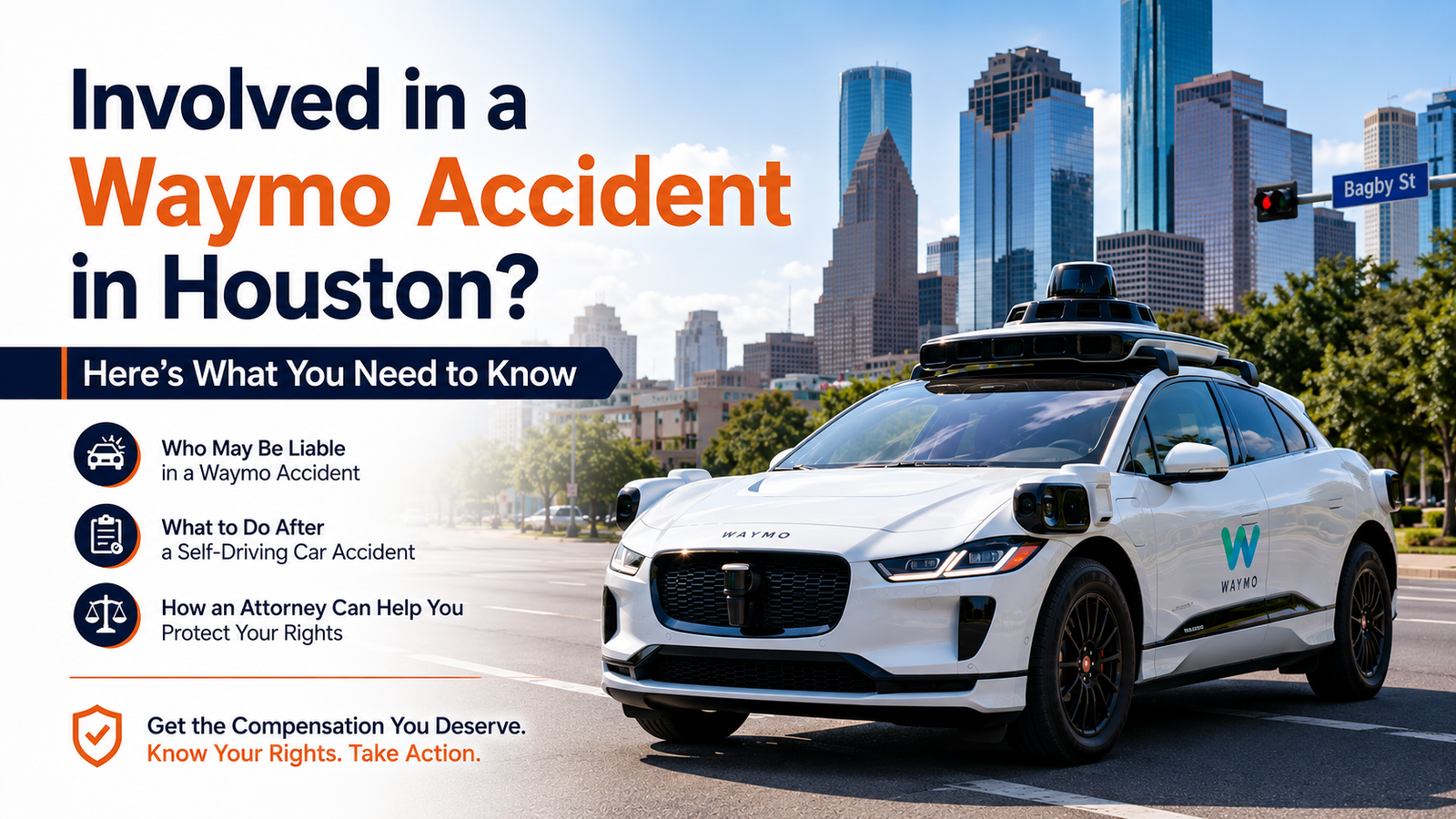
If a Waymo robotaxi hits you, or you get hurt while riding in one, the first steps are pretty similar to what you’d do after any other car accident in Houston. Get medical attention, report the accident, and document as much as you can. Take photos, save any information you have, and keep track of your injuries and medical treatment.
That said, figuring out who is responsible can get a little more complicated. With a self-driving vehicle, liability could involve Waymo’s technology, another driver, or, in some cases, more than one party. In other words, it’s not always as simple as pointing to one driver and saying, “They caused the crash.” A Houston self-driving car accident lawyer at Orange Law can look into what happened, identify who may be responsible, and help you pursue the compensation you may be entitled to.
Waymo’s driverless vehicles are becoming a more common sight on Houston roads. And as more of these robotaxis hit the streets, the chances of Houston residents being involved in accidents with them naturally go up as well.
So, what actually happens after a Waymo accident? Who could be held responsible? And, just as importantly, what can you do to protect your claim from day one?
How Waymo’s Self-Driving System Works
Waymo vehicles use a combination of cameras, radar, and lidar sensors to create a real-time view of everything happening around them on the road. That information is then processed by an AI-powered driving system to help the vehicle make decisions. And, perhaps most importantly, the technology can learn from incidents and situations encountered across the broader fleet, meaning lessons from one vehicle can potentially help improve how other Waymo vehicles respond in similar situations.
Houston has become one of Waymo’s fastest-growing markets. The company opened its fully driverless ride-hailing service to the public in early 2026, and by mid-2026, its service area had expanded to roughly 50 square miles. Basically, riders can request a car through the Waymo One app much like they would with Uber or Lyft-the big difference, of course, is that there’s no human driver behind the wheel.
And that’s exactly what makes accident cases involving autonomous vehicles a little more complicated. In a typical car crash, investigators can talk to the driver and ask what they saw, when they braked, or why they made a particular decision. With a Waymo vehicle, however, there may be no human driver to interview at all. Instead, the focus often shifts to things like sensor data, software logs, the vehicle’s decision-making process, and, in some cases, how the AI system responded to the situation.
Are Waymo Vehicles Actually Safer? The Data Says Otherwise
Waymo markets its vehicles as safer than the average human driver, but independent numbers tell a more complicated story. Research from the APM Research Lab examining robotaxi safety data found that Waymo vehicles were involved in crashes at roughly twice the rate of human-driven vehicles.
Several recurring failure patterns show up across reported Waymo incidents:
- Abrupt, unpredictable braking that leads to rear-end collisions
- Failing to yield when a truck or larger vehicle backs up at an intersection
- Colliding with gates, scooters, or other unexpected roadway objects
- Freezing or stalling mid-turn directly in the path of oncoming traffic
Regulators have taken notice. The National Highway Traffic Safety Administration opened a formal investigation in 2024 covering hundreds of reported Waymo crashes, an inquiry that ultimately resulted in recalls affecting two Waymo vehicle models.
None of this means every Waymo crash is the company’s fault – but it does mean the technology has real, documented failure modes that a serious investigation needs to rule in or out.
Who’s Liable When a Waymo Crashes?
Texas law hasn’t fully caught up to autonomous vehicle technology, which means these cases don’t fit neatly into the playbook adjusters use for ordinary two-car wrecks. Liability can land on one party or be shared across several, depending on what actually caused the crash.
When Waymo Itself May Be Responsible
If the crash traces back to a software glitch, a sensor malfunction, a bad mapping decision, or an automated system that simply failed to react appropriately, the case may point toward Waymo’s liability. Building that case usually requires pulling black box data, sensor logs, and internal crash reports to show what the vehicle “saw” and how it responded in the seconds before impact.
When Another Driver Is at Fault
A Waymo being part of the crash doesn’t automatically mean the autonomous vehicle caused it. If another motorist was speeding, distracted, or ran a light, standard negligence principles still apply – the human driver can be held liable just as in any other Houston collision.
When Fault Is Shared
Many Waymo accidents don’t have a single clean cause. Police reports, witness accounts, vehicle telemetry, and roadway conditions often point to overlapping factors, which means more than one party – the vehicle’s system, another driver, or even a third party like a municipality responsible for signage – may share responsibility under Texas’s proportionate liability rules.
Why the Investigation Is the Whole Case
Because there’s no human driver to question, autonomous vehicle claims live or die on data. An experienced personal injury attorney knows how to preserve that evidence before it disappears, bring in accident-reconstruction and AI specialists when needed, and identify every party who might owe you compensation – well before an insurance company starts making offers.
Steps to Take After a Waymo Accident
A crash with a driverless vehicle is disorienting in a way a normal accident isn’t – there’s no one to exchange words with at the scene. Here’s what protects your health and your claim:
- Call 911. Get police and EMS on scene so there’s an official report and immediate medical evaluation.
- Document everything. Photograph the vehicles, damage, road conditions, and any visible injuries. Get contact information from witnesses if possible.
- Get checked out medically, even if you feel okay or weren’t transported by ambulance. Some injuries don’t show symptoms right away, and a medical record ties your injuries to the crash.
- Contact an attorney experienced with autonomous vehicle claims before speaking with Waymo’s insurer or legal team. What you say early on can affect your case later.
Why These Cases Require a Deeper Investigation
A standard fender-bender investigation leans on police reports, witness statements, and photos. A Waymo crash investigation adds several more layers: black box data, onboard camera footage, sensor and lidar logs, mapping data, and records of how the AI system made its decisions in the moments before the collision.
Pinpointing fault often means understanding whether the failure was a software bug, a sensor malfunction, or a limitation in how the self-driving system was trained to react – questions that go well beyond what a typical adjuster is equipped to evaluate.
Frequently Asked Questions
Is Waymo liable if its self-driving car causes an accident?
Waymo can be held liable when a crash results from a software failure, sensor malfunction, or flawed automated decision-making. Liability isn’t automatic, though – it depends on what the vehicle’s data shows happened before impact.
What if another driver caused the accident, not the Waymo vehicle?
Then that driver is treated like any other at-fault motorist under Texas negligence law, and a claim would typically go through their auto insurance rather than Waymo.
Can I sue Waymo directly after an accident in Houston?
Yes, it’s possible to pursue a claim against Waymo if the evidence shows the vehicle’s technology contributed to the crash. These claims typically require specialized evidence – such as sensor and software logs – that a lawyer can help obtain and interpret.
What should I do immediately after a Waymo hits my car?
Call 911, photograph the scene, get a medical evaluation, and contact a personal injury attorney before discussing the crash with Waymo’s insurance representatives.
How is a Waymo accident claim different from a regular car accident claim?
There’s no human driver to question, so the case relies heavily on technical data – black box records, sensor logs, and AI decision data – instead of driver testimony.
Do I need a lawyer for a self-driving car accident, or can I handle it myself?
These claims involve technical evidence and a company with significant legal resources on the other side. An attorney experienced with autonomous vehicle cases can level the playing field and typically improves the odds of full and fair compensation.
Talk to Orange Law About Your Waymo Accident Claim
Waymo and other self-driving car companies put a lot of effort into making their technology seem safe. But when something goes wrong, dealing with the crash, the technology, and the insurance companies can feel pretty overwhelming. And unfortunately, these companies may also work hard to limit how much they have to pay.
If you or someone you love was injured in an accident involving a Waymo vehicle in Houston, you don’t have to figure everything out on your own. Karan Joshi and the team at Orange Law can help you understand what happened, preserve important evidence, identify everyone who may be responsible, and fight for the compensation you deserve.
The good news? You don’t pay any upfront fees.