
Getting a call that someone you love has been arrested can turn your whole day upside down in an instant. Your mind starts racing-Where are they? What happens next? How can I get them out of jail? And honestly, if you’ve never had to deal with the jail or court system before, the whole process can feel pretty confusing and overwhelming.
The good news is that bailing someone out of jail usually follows a fairly straightforward process, even though the exact rules can vary depending on where the arrest happened. Once you understand the basic steps, it’s a lot easier to figure out what you need to do next instead of feeling like you’re just guessing your way through it.
In this guide, we’ll walk you through how to bail someone out of jail, what information you’ll need, the different ways you may be able to pay bail, and when it might be a good idea to speak with a lawyer about the situation.
How Can I Bond Someone Out of Jail?
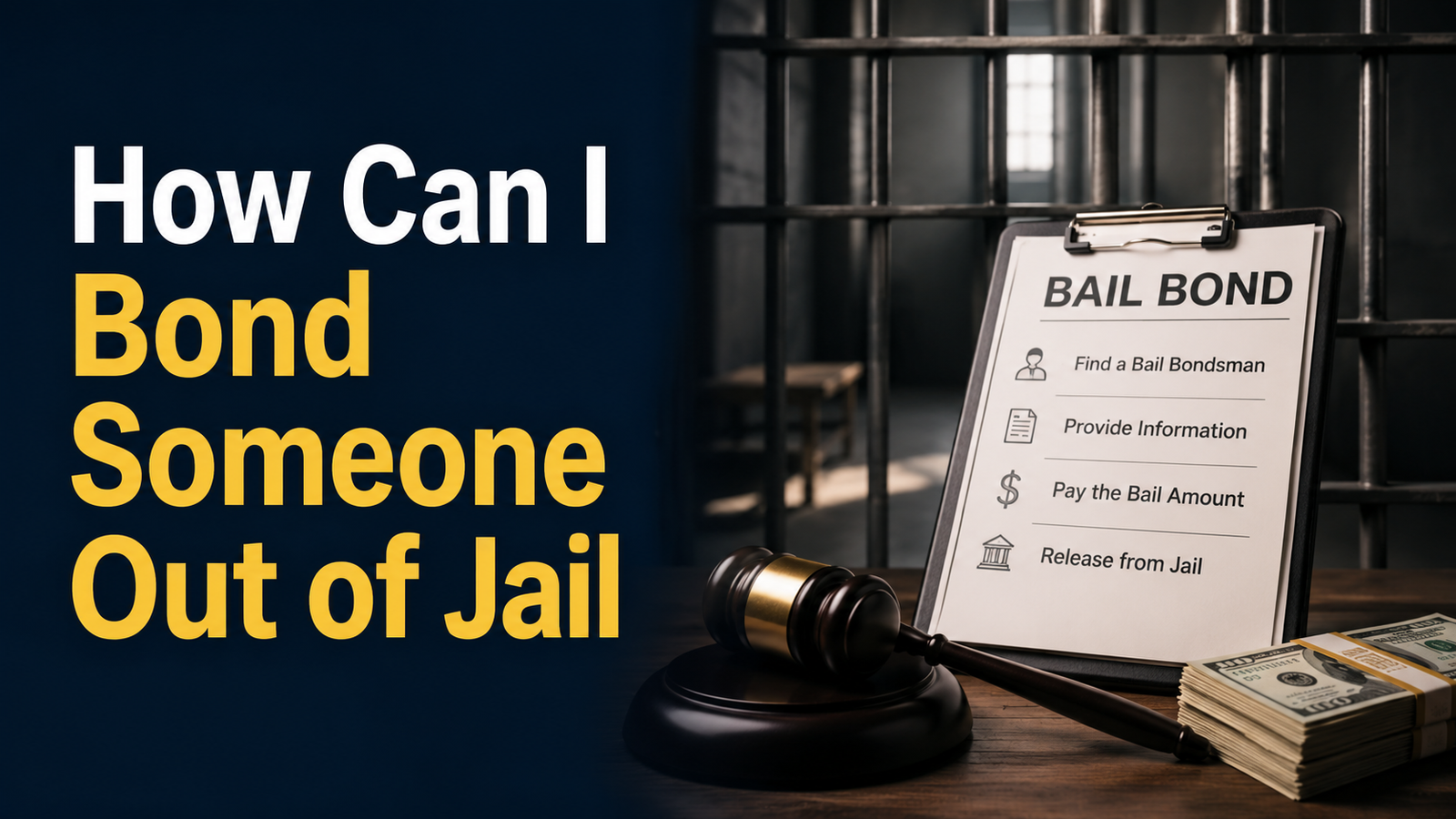
If you’re trying to bond someone out of jail, the process usually starts with finding out where they’re being held and whether bail has been set. From there, you generally have a couple of options. You can either pay the full bail amount directly to the court or jail, or, in many cases, work with a licensed bail bond agent who can post a surety bond for you in exchange for a percentage-based fee. Basically, the exact process can vary depending on where you are, the county, the charges involved, and the rules in that particular state.
What Does It Mean to Bond Someone Out of Jail?
Basically, bonding someone out of jail means helping secure their release by meeting the bail amount set by the court. You can usually do this by paying the full bail amount yourself or by working with a bail bond agent who helps cover it for you.
Now, people often use the words “bail” and “bond” like they mean the same thing, but there’s actually a small difference between the two.
Bail is the amount of money the court requires as a condition of releasing someone from jail while their criminal case is still pending. The main idea is to make sure the person comes back for their required court dates. If they show up to all their hearings and follow the court’s requirements, the bail money may generally be returned once the case is over, although certain fees or deductions may apply.
A bond, on the other hand-more specifically, a surety bond-is basically a way to get someone released without having to pay the entire bail amount out of pocket. For example, a licensed bail bond agent agrees to guarantee the full bail amount to the court if the person fails to appear. In return, you typically pay the agent a non-refundable fee, which is often a percentage of the total bail amount.
So, simply put, when someone says they want to bond a person out of jail, they usually mean they’re using a bail bond agent instead of paying the full bail amount themselves.
At the end of the day, both options are meant to do the same thing: help get the person released from jail while their case moves through the court system.
How to Bail Someone Out of Jail: Step-by-Step
Bailing someone out of jail generally involves locating them, confirming the charges and bail amount, gathering the right information, choosing a payment method, and completing the paperwork required by the jail or bail bond agent.
Here’s how the process typically unfolds:
- Find out where the person is being held. After an arrest, individuals are usually taken to a local jail or detention facility. Many county jail websites have an online inmate locator, or you can call the facility directly.
- Confirm the charges and booking status. Booking is the administrative process that happens after arrest – fingerprinting, photographs, and entering the person into the system. Bail generally isn’t set until booking is complete.
- Find out whether bail has been set. In some cases, bail is set according to a standard schedule for certain charges. In others, a judge must set it at a hearing, which can take longer, especially over weekends or holidays.
- Understand the available release options. Depending on the jurisdiction and the charges, options might include cash bail, a surety bond, property bond, or release on personal recognizance.
- Gather the information needed to post bail. This usually includes the person’s full legal name, date of birth, the facility where they’re held, and any booking or case number available.
- Decide how to pay or post bail. You can typically pay the full bail amount directly to the jail or court, or work with a bail bond agent if you don’t have the full amount available.
- Complete the bail bond process. If you’re using an agent, this means signing a bond agreement, paying the required fee, and sometimes providing collateral, depending on the agent’s policies.
- Understand the release conditions. Release often comes with conditions – such as court dates, travel restrictions, or no-contact orders – that the released person must follow.
Every one of these steps can look a little different depending on the state, county, court, and the specific charges involved, so treat this as a general roadmap rather than a guaranteed sequence.
What Do You Need to Bail Someone Out?
You typically need the person’s full legal name, date of birth, the name of the jail or facility, any available booking information, the bail amount, an accepted payment method, and your own identification.
Here’s a practical checklist to have ready before you start the process:
- Full legal name of the person in custody, including any middle name
- Date of birth
- Jail or detention facility information – name, address, and phone number
- Booking or inmate number, if it’s been assigned
- Bail amount, if it has already been set
- Payment method – cash, credit/debit card, cashier’s check, or bond agent fee, depending on what’s accepted
- Your own government-issued ID, since jails and bond agents typically require identification from the person posting bail
Some jails or bond companies may ask for additional details, like the arresting agency or case number. Since requirements can vary significantly by jurisdiction, it’s worth calling the facility or a local bail bond agent ahead of time to confirm exactly what they’ll need from you.
How to Post Bail for Someone
To post bail for someone, you typically contact the jail or court to confirm the bail amount, choose whether to pay it directly or through a bail bond agent, and then complete the required paperwork and payment.
Posting bail generally means one of two things: paying the court or jail directly, or working through a bail bond agent who posts it on your behalf.
If you’re paying directly, you’ll usually go to the jail’s booking window or the courthouse cashier, provide the person’s information, and pay the full bail amount using an accepted method. Once processed, the release typically follows jail procedures for that facility.
If you’re going through a bail bond agent, you’ll contact a licensed agent, provide the same identifying information, and pay a fee (commonly a percentage of the total bail, though this varies by state and agent). The agent then posts the bond with the court, and you sign an agreement outlining your responsibilities.
Either way, understanding how to post bail for someone starts with confirming the exact bail amount and knowing which payment methods the specific facility accepts – not every jail handles this the same way.
How Can You Pay Bail for Someone?
Bail can often be paid through cash, a surety bond arranged through a bail bond agent, or in some jurisdictions, a property bond – though availability depends on local rules and the court.
Common ways to pay bail for someone include:
- Cash bail – paying the full bail amount directly to the jail or court in cash or another accepted form, such as a cashier’s check or card payment where allowed.
- Surety bonds – working with a licensed bail bond agent who pays the bail amount on your behalf in exchange for a fee, which is usually not refundable.
- Property bonds – in some jurisdictions, real estate or other property can be used as collateral to secure release, though this option isn’t available everywhere and often involves additional paperwork and court approval.
- Other court-approved release options – some courts allow installment plans or other arrangements, but these are set by local rules and aren’t guaranteed to be offered.
Not every option is available in every state or county, and some courts limit which methods they’ll accept based on the charges. Before assuming a particular payment method will work, it’s worth confirming directly with the jail, court, or a bail bond agent.
How Does the Bail Bond Process Work?
The bail bond process generally involves a bail bond agent agreeing to guarantee the full bail amount to the court in exchange for a fee, allowing the person to be released without the family paying the entire bail upfront.
A bail bond agent is a licensed professional (sometimes working for a bail bond company) who acts as a surety – essentially promising the court that the full bail amount will be paid if the defendant doesn’t appear for their court dates.
Here’s generally how it works:
- You contact a bail bond agent and provide the defendant’s information along with the bail amount.
- The agent charges a fee, often a percentage of the total bail, which is typically non-refundable regardless of the case outcome.
- Depending on the agent’s policies and the size of the bail, you may be asked to provide collateral, such as property or other assets, especially for larger bail amounts.
- You (or whoever signs the agreement) becomes responsible for making sure the defendant appears in court, since you’re financially on the hook if they don’t.
Because this is a binding financial agreement, it’s important to read everything carefully before signing. Ask the agent to explain any fees, collateral requirements, and what happens if the defendant misses a court date. If anything in the agreement is unclear, it’s reasonable to ask questions before committing.
How Long Does It Take to Get Someone Out of Jail After Bail Is Posted?
Release times vary widely – sometimes a couple of hours, sometimes much longer – depending on the jail’s booking workload, verification steps, and staffing at the time.
There’s no fixed timeline that applies everywhere. Some of the factors that affect how long release takes include:
- How busy the jail is at that particular time
- Whether booking has been fully completed
- The time of day, since releases can take longer overnight or on weekends
- How quickly paperwork can be verified, whether you’re paying directly or using a bond agent
- Staffing levels at the facility
If you’re waiting on a release, it’s reasonable to call the jail periodically for updates rather than assuming something has gone wrong if it’s taking a while. Some facilities also give bail bond agents a general sense of expected wait times based on current conditions.
What Happens If You Cannot Afford Bail?
If you can’t afford bail, options may include working with a bail bond agent for a reduced upfront cost, asking the court for a bail review, or in some cases, exploring whether the person qualifies for a non-monetary release.
Not being able to pay bail in full doesn’t necessarily mean there are no options. A few paths people sometimes explore:
- Bail bond agents allow you to pay a fraction of the total bail instead of the full amount, though the fee itself may still be difficult to cover depending on the total bail set.
- Requesting a bail review hearing. In some cases, a defense attorney can ask the court to reconsider or reduce the bail amount based on the circumstances of the case and the defendant’s situation.
- Non-monetary release options, such as personal recognizance, may be available depending on the charges and the person’s history – this is discussed more below.
Because these options depend heavily on the specific court, judge, and charges involved, this is often a point where speaking with a criminal defense attorney becomes genuinely useful. An attorney can look at the details of the case and explain which paths might realistically apply.
What Happens After Someone Is Released on Bail?
After release, the person is generally required to attend all scheduled court dates and follow any conditions set by the court, which can include travel restrictions or no-contact orders depending on the case.
Being released on bail isn’t the end of the process – it’s a temporary status while the case is pending. Common conditions include:
- Court appearances. The person must show up for every scheduled hearing. Missing even one can lead to a warrant and forfeiture of the bail.
- Release conditions. Courts sometimes impose specific rules, like checking in with a pretrial services officer or avoiding certain activities.
- Travel restrictions. Some release orders limit travel outside the county or state without court permission.
- Contact restrictions. In cases involving an alleged victim, the court may issue a no-contact order as a condition of release.
- Not missing court. This is worth repeating because it’s the most important part — missing a court date can result in the bail being forfeited and a new warrant being issued.
Understanding and following these conditions carefully protects both the defendant’s release status and any bail money that was put up.
Can Someone Get Out of Jail Without Paying Bail?
Yes, in some cases – this is typically called release on personal recognizance (sometimes called an “OR release”), where the person is released based on a written promise to appear in court rather than paying money upfront.
Personal recognizance release means the court allows someone to be released without posting bail, based on factors like the nature of the charge, ties to the community, and criminal history. It’s not automatic and isn’t available for every charge or every defendant.
Other non-monetary or reduced options that sometimes exist, depending on the jurisdiction, include supervised release programs or citation-based release for certain minor offenses, where the person is given a written notice to appear instead of being held pending bail.
Eligibility for these options depends heavily on the specific charges, the court’s practices, and the individual’s history, so it’s not something that can be predicted with certainty in every case.
When Should You Contact a Lawyer?
It’s especially worth contacting a lawyer when the charges are serious, bail is unusually high, release has been denied, the conditions are complicated, or there are immigration concerns tied to the arrest.
Not every situation requires immediate legal help just to post bail – sometimes it really is a matter of finding the facility and completing the paperwork. But there are situations where legal guidance becomes important:
- Serious or complex criminal charges, where the stakes and potential consequences are significant
- High bail amounts that may be worth challenging through a bail review
- Denial of release, where the court has declined to set bail or has held someone without bond
- Complicated bail conditions that are hard to understand or seem unusually restrictive
- Concerns about immigration consequences, since criminal charges can sometimes affect immigration status in ways that aren’t obvious upfront
- Uncertainty about legal rights or next steps, especially if this is the first time dealing with the criminal justice system
If any of these apply, talking with a criminal defense attorney early in the process – even before the case moves forward – can help you understand the situation more clearly.
How Orange Law Can Help
Dealing with an arrest involving someone you care about is stressful enough without also trying to decode unfamiliar legal terminology and procedures. Orange Law works with individuals and families who are trying to understand their options after an arrest, from explaining how the bail process works to addressing concerns about bail conditions or next steps in a case.
Attorney Karan Joshi can review the specific facts of a situation – the charges, the jurisdiction, and the circumstances – and help explain what options may be realistically available. Every case is different, and there’s no way to predict an outcome in advance, but having a clearer picture of the process can make a difficult moment feel more manageable.
[Internal Link Opportunity: Link to Orange Law’s attorney profile page for Karan Joshi]
Contact Orange Law for Guidance
If someone you care about has been arrested and you’re unsure what to do next, getting legal guidance can help you better understand the situation, available options, and potential next steps. Learning how to bail someone out of jail is a good first step, but every case has its own details that a general guide can’t fully address.
Contact Orange Law to discuss your circumstances with Karan Joshi and get clarity on what to expect moving forward.
Frequently Asked Questions
1. How do I bail someone out of jail?
You generally need to confirm where the person is held, find out the bail amount, and either pay it directly or work with a licensed bail bond agent. The exact steps can vary depending on the jail, court, and charges involved.
2. What do you need to bail someone out?
You typically need the person’s full legal name, date of birth, the facility where they’re held, any booking information available, the bail amount, a valid payment method, and your own identification.
3. Can I post bail for someone else?
In most cases, yes — anyone with the necessary information and payment method can post bail for another person, though some jails or bond agents may have their own requirements for who can do so.
4. How much money do I need to post bail?
The amount depends entirely on the bail set by the court, which is influenced by the charges, jurisdiction, and other case-specific factors. There’s no fixed or universal amount.
5. How long does it take to get someone out of jail after bail is posted?
It varies – sometimes a couple of hours, sometimes longer – depending on the jail’s booking workload, staffing, and verification process at the time.
6. What happens if I cannot afford bail?
You may still have options, such as using a bail bond agent for a reduced upfront cost or requesting a bail review through the court. An attorney can help explain what’s realistically available in a specific case.
7. Do you get bail money back?
If bail was paid in cash directly to the court and the defendant attends all required hearings, it’s often returned, sometimes minus administrative fees. Fees paid to a bail bond agent, however, are typically non-refundable.
8. What happens if someone misses their court date?
Missing a court date can result in a warrant for arrest and forfeiture of the bail amount that was posted. It can also negatively affect the underlying case.
9. Can someone get out of jail without paying bail?
Yes, in some cases, through release on personal recognizance or other non-monetary options, depending on the charges, the court, and the individual’s history.
10. Should I speak with a lawyer before posting bail?
It’s not always necessary for straightforward situations, but it becomes especially valuable when the charges are serious, bail is high, release has been denied, or the conditions are unclear.