
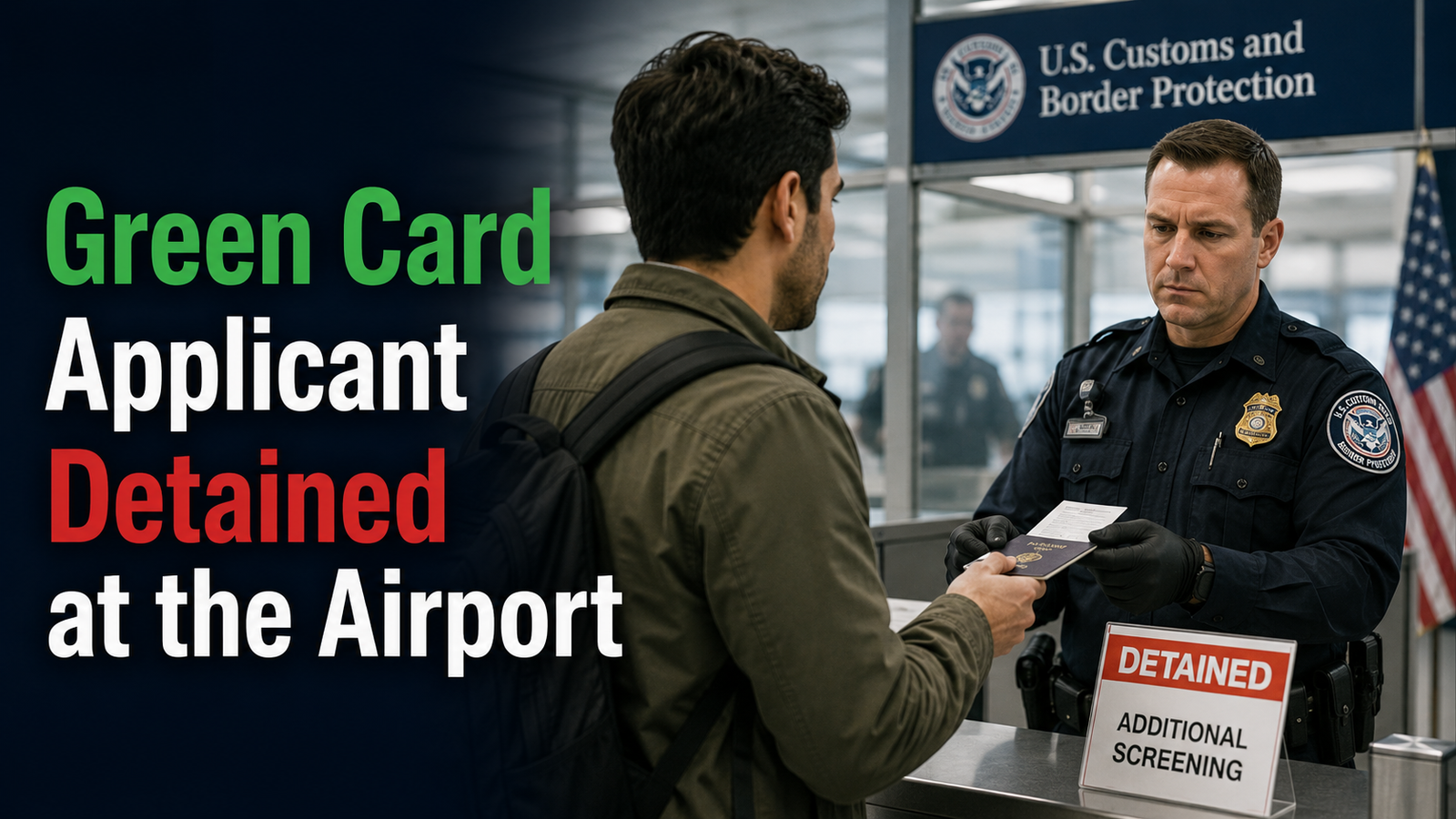
You’ve just landed after a long international flight. You’re tired, probably a little jet-lagged, and all you want to do is grab your bags and finally get home. But then, instead, a Customs and Border Protection (CBP) officer pulls you aside and directs you to a separate room for what’s known as secondary inspection.
You have your green card in hand, but all of a sudden, you’re probably wondering what happens next and whether your status in the United States could be at risk.
If you’re a green card applicant detained at the airport, or a lawful permanent resident who has just gone through something like this, here’s the short version: try to stay calm, answer questions honestly, don’t sign anything you don’t fully understand, and ask questions if something doesn’t make sense. And, when you can, reach out to an immigration attorney as soon as reasonably possible.
Now, being sent to secondary inspection does not automatically mean you’re losing your green card. That said, what happens during the inspection – and how you respond – can matter. It’s a stressful situation, no doubt, especially when you’re exhausted and caught off guard, but knowing what to expect can help you avoid making a rushed decision.
In this article, we’ll break down why CBP may send someone to secondary inspection, what CBP officers can and can’t do, and what steps may make sense if you or a family member is dealing with this situation right now.
What Should You Do If You Are Detained at the Airport?
If you’re stopped, questioned, or sent to secondary inspection at a U.S. airport, the first thing to do is stay calm and cooperate with the CBP officers. At the same time, be careful about what you say—never give false or misleading information. If you don’t understand a question or a document, it’s completely okay to ask the officer to explain it.
And, honestly, don’t sign anything you don’t fully understand, especially something as serious as Form I-407, which can affect your permanent resident status. Take your time to understand what you’re being asked to sign and what it could mean for you.
As soon as you’re able to, write down everything you remember about what happened, including what the officers asked and what documents you were given. Most importantly, contact an experienced immigration attorney as soon as possible, particularly if CBP is asking you to give up your green card or permanent resident status.
Why Might a Green Card Applicant Be Detained at the Airport?
There isn’t one single reason CBP pulls a lawful permanent resident aside. It’s usually one or more of the following:
- Routine secondary inspection. Sometimes it’s random, or tied to broader screening patterns that have nothing specific to do with you.
- Questions about identity or travel documents. A damaged, expired, or mismatched document can trigger extra scrutiny.
- Extended time outside the United States. Long absences can raise questions about whether you still intend to live in the U.S.
- Possible abandonment of permanent resident status. CBP may question whether you’ve effectively given up your green card by living abroad for too long.
- Criminal history or pending legal issues. Even old or resolved matters can show up in a records check.
- Immigration record discrepancies. Something in your file may not match what you’re presenting at the airport.
- Prior immigration violations. A past overstay, misrepresentation, or other issue can resurface.
- Customs or security-related concerns. These are usually unrelated to your immigration status but can still lead to a longer stop.
It’s worth repeating: a green card applicant detained airport experience, on its own, is not a final determination of anything. Secondary inspection is a process for CBP to ask questions and review documents. It’s stressful, but it’s not the end of the road.
What Happens During Secondary Inspection?
Secondary inspection is a more detailed review that happens in a separate area of the airport, away from the main CBP inspection line.
Here’s generally what to expect:
- An officer will ask more detailed questions about your trip, your ties to the U.S., your address, employment, and travel history.
- CBP may review your passport, green card, prior entry and exit records, and other supporting documents.
- Officers may check government databases for anything related to your immigration or criminal history.
- The process can take anywhere from a few minutes to several hours, depending on what needs to be verified.
- You may be asked to wait in a holding area during this time.
The extra time doesn’t automatically mean something is wrong. Records checks take time, and officers may simply be confirming details. That said, this is exactly the moment to stay calm, answer truthfully, and avoid volunteering more than what’s actually asked. Giving false or inconsistent information tends to create far bigger problems than the original questioning ever would.
Green Card Applicant Detained Airport: What Are Your Rights?
Even in a stressful moment, you still have some basic protections and options:
- You can ask for clarification. If you don’t understand a question, a form, or what an officer is asking you to do, it’s reasonable to ask them to explain it.
- You can read documents before signing. You’re generally not required to sign something on the spot without reading and understanding it.
- You can ask to contact an attorney. You can request the opportunity to speak with a lawyer. That said, U.S. Customs and Border Protection has significant authority at ports of entry, and the legal framework around attorney access during CBP inspection is more limited and situational than it is in many other legal settings. There is no absolute right to have an attorney physically present for every stage of CBP questioning, and whether or how that request is accommodated can depend on the specific circumstances.
- You have the right to be treated professionally. Officers are expected to conduct inspections according to CBP policy and procedure.
Because the rules governing airport inspections are more nuanced than a simple checklist, understanding permanent resident rights at the airport is one of the areas where speaking with an immigration lawyer for airport detention situations, ideally before your next international trip if you have any concerns, can make a real difference.
Should You Sign Form I-407?
Form I-407 is the document CBP uses when a lawful permanent resident voluntarily gives up, or “abandons,” their green card. Signing it is a serious decision because it can end your status as a permanent resident.
A few things worth understanding:
- Signing I-407 is meant to be voluntary. You’re not automatically required to sign it just because an officer presents it to you or suggests you should.
- The consequences are significant. Once permanent resident status is given up, getting it back generally means starting over through the appropriate immigration process, if that’s even an option in your situation.
- Pressure and confusion are not the same as understanding. Feeling rushed, tired, or intimidated is common in these situations, but that doesn’t mean it’s the right time to make a permanent decision about your immigration status.
- You can decline to sign on the spot. If you’re unsure, it’s reasonable to say you’d like to understand the form fully before deciding.
If you’re ever asked to sign Form I-407, treat it as a moment to slow down, not speed up. This single decision has long-term consequences, and it deserves real understanding, not a rushed signature at an airport counter.
Can CBP Take Away Your Green Card at the Airport?
This question comes up a lot, and the honest answer is: it depends on what’s actually happening. These are different things, even though they can feel similar in the moment:
- Being questioned is routine and doesn’t mean anything has been decided.
- Secondary inspection is a more thorough review, not a final ruling.
- Document seizure may happen if CBP has specific concerns about a document’s validity, but it’s a separate step from taking away your status.
- Allegations of abandonment mean CBP believes you may have given up your residency through your actions (like extended time abroad), but an allegation isn’t a legal conclusion on its own.
- Inadmissibility concerns relate to whether CBP believes you can be lawfully admitted to the U.S. at that time, which is a distinct legal question from your green card status itself.
- Formal immigration proceedings are a separate, more serious legal process. Being referred to immigration court is a much bigger step than being questioned or held for secondary inspection.
CBP does have real authority at U.S. ports of entry, but taking away a green card, permanently, isn’t something that happens through casual conversation or on the spot. It generally involves either your own voluntary decision (like signing Form I-407) or a more formal legal process. If you’re dealing with anything beyond routine questioning, this is a good point to involve an attorney rather than trying to sort it out alone at the airport.
What Should You Do If You Are Detained or Held at the Airport?
If you find yourself in this situation, here’s a practical list to keep in mind:
- Stay calm and respectful. How you present yourself matters, even when you’re frustrated or scared.
- Do not provide false information. Inconsistent or untrue statements can cause far more damage than the original issue.
- Ask for clarification if you don’t understand a question or document. It’s reasonable to ask an officer to explain something before you respond.
- Read every document carefully before signing. Don’t sign anything, including Form I-407, without understanding exactly what it means.
- Do not voluntarily give up important immigration rights without understanding the consequences. Take your time on any decision that affects your legal status.
- Keep records of what happened. Once you’re able to, write down the date, time, location, officer names or badge numbers if available, and a summary of the conversation.
- Contact an experienced immigration attorney as soon as reasonably possible. Even after the fact, a lawyer can help you understand what happened and what, if anything, needs to happen next.
When Should You Contact an Immigration Lawyer?
Not every stop at the airport needs a lawyer involved. But there are situations where getting legal guidance sooner rather than later really does matter:
- CBP questions whether you abandoned your permanent resident status.
- You’ve spent long periods of time outside the United States.
- You have a criminal history, even if it feels resolved or minor.
- You were asked to sign Form I-407.
- You have prior immigration violations or past removal proceedings.
- You were placed into formal immigration proceedings.
- Your family isn’t sure what happened during the incident and needs help understanding it.
This is where a firm like Orange Law, working with an attorney like Karan Joshi, can be useful. An immigration attorney can look at your travel history, your immigration documents, and the specific actions CBP took, and help you understand what your options may look like from there. No attorney can promise a particular outcome, and anyone who does should raise a red flag, but a knowledgeable review of your situation can make the path forward much clearer.
What Can Family Members Do if Someone Is Detained at the Airport?
If it’s your spouse, parent, or family member going through this, waiting on the outside can feel just as stressful. A few things that actually help:
- Gather identifying and immigration information. Passport details, green card number, and any relevant case numbers can be useful if you need to follow up.
- Document the time and location of the incident. Note when they were detained and at which airport or CBP facility.
- Keep copies of immigration documents. Having copies of the green card, prior approval notices, or other records can save time later.
- Avoid assumptions about the legal situation. It’s easy to jump to conclusions, but airport detention covers a wide range of scenarios, from a quick records check to something more serious.
- Contact qualified legal counsel when appropriate. If the situation isn’t resolving quickly, or your family member is asked to sign documents, reaching out to an immigration attorney can help everyone understand the next steps.
How to Prepare Before Traveling Outside the United States
A little preparation before you leave the country can prevent a lot of stress when you’re returning to the United States with a green card:
- Carry valid immigration and travel documents. Make sure your green card and passport are current and in good condition.
- Understand the risks of lengthy absences. Trips longer than six months, and especially longer than a year, can raise questions about whether you’ve maintained your residency.
- Review unresolved immigration concerns before traveling. If something’s pending or unclear about your status, it’s worth addressing before you leave, not after you’re back at the airport.
- Consider legal advice before international travel if there are concerns. If you have any past issues, extended time abroad planned, or general uncertainty, a quick consultation beforehand can go a long way.
- Keep copies of important immigration records. Store digital or physical copies somewhere accessible in case originals are requested or reviewed.
When Does an Airport Detention Become a Serious Immigration Issue?
Most stops at the airport, even ones that feel alarming in the moment, resolve with some extra questions and a records check. But there are situations that tend to require closer legal attention:
- You’re asked to sign Form I-407 and you’re unsure about the long-term effects.
- CBP raises abandonment of permanent resident status as a real concern, not just a passing question.
- You’re issued a notice to appear in immigration court.
- Your documents are seized, or you’re told there’s a discrepancy in your immigration record that needs to be resolved.
- You have a criminal history that comes up during questioning.
If any of these apply to you, it’s a reasonable point to stop trying to handle things alone and get an experienced set of eyes on your specific facts.
How Orange Law Can Help
Going through a green card applicant detained airport situation, whether it happened to you or someone in your family, can leave you with more questions than answers. Orange Law and attorney Karan Joshi work with clients who are trying to make sense of exactly this kind of experience: what CBP said, what documents were involved, and what it actually means for their immigration status going forward.
The team can review your specific circumstances, including your travel history, your immigration paperwork, and the actions CBP took during your inspection, to help you understand where things stand and what steps might make sense from here. No two situations are exactly alike, and outcomes depend on the individual facts involved, so this kind of review is meant to give you clarity, not a guaranteed result.
FAQ
Can a green card holder be detained at the airport?
Yes. Lawful permanent residents can be stopped, questioned, and sent to secondary inspection at U.S. airports. This doesn’t mean their green card is being taken away; it usually means CBP wants to verify something before allowing entry to continue normally.
What is secondary inspection at a U.S. airport?
Secondary inspection is a more detailed screening process that happens in a separate area of the airport. CBP officers ask additional questions, review documents, and check records that go beyond what happens in the standard inspection line.
Can CBP question a lawful permanent resident?
Yes. CBP has broad authority to question travelers, including green card holders, at U.S. ports of entry. This is a normal part of the inspection process and doesn’t by itself indicate a legal problem.
Should I sign Form I-407 at the airport?
Not without fully understanding what it means. Form I-407 is used to voluntarily give up permanent resident status. It’s a significant, often irreversible decision, so it deserves careful thought rather than a signature made under pressure.
Can a long trip outside the U.S. affect my green card?
It can. Extended absences, especially over six months or a year, may lead CBP to question whether you maintained the intent to live in the United States. Each situation depends on the specific facts and history involved.
Can I contact an immigration lawyer if I am stopped by CBP?
You can ask to reach out to a lawyer, though the rules around attorney access during CBP questioning are more limited than in many other legal settings. Even if you can’t have a lawyer present for the entire process, you can consult one afterward about what happened.
What should my family do if I am detained at the airport?
They should gather your identifying and immigration information, document the details of the incident, and avoid jumping to conclusions. If the situation involves signing documents or extends beyond routine questioning, contacting an immigration attorney is a reasonable next step.
What happens if CBP believes I abandoned my permanent resident status?
CBP may raise this as a concern based on factors like extended time abroad or ties outside the U.S. This is treated as an allegation, not an automatic loss of status. How it’s handled, including whether you’re asked to sign Form I-407 or face further proceedings, depends on the individual case.
Conclusion
Being a green card applicant detained at the airport can be incredibly unsettling, and honestly, it’s easy to feel like something has gone seriously wrong when you’re pulled aside for questioning. But in many cases, secondary inspection is exactly what it sounds like: a more detailed review. It doesn’t automatically mean that immigration authorities have made a final decision about your status.
What really matters is how you handle the situation. Try to stay calm, answer questions truthfully, ask for clarification if you don’t understand something, and-most importantly-don’t sign any document unless you fully understand what you’re signing. The circumstances of your case matter, of course, but the way you respond during the process can matter, too.
If you or someone in your family has been through an experience like this, or you’re getting ready to travel internationally and are worried about what could happen at the airport, getting case-specific legal advice can give you a much clearer picture of where you stand. Orange Law and attorney Karan Joshi can review the details of your situation, including your immigration and travel history and any documents involved, and explain what your possible next steps may be.
At the end of the day, if you’re looking for answers and don’t want to rely on guesswork, scheduling a confidential consultation with an immigration attorney can be a sensible first step.