
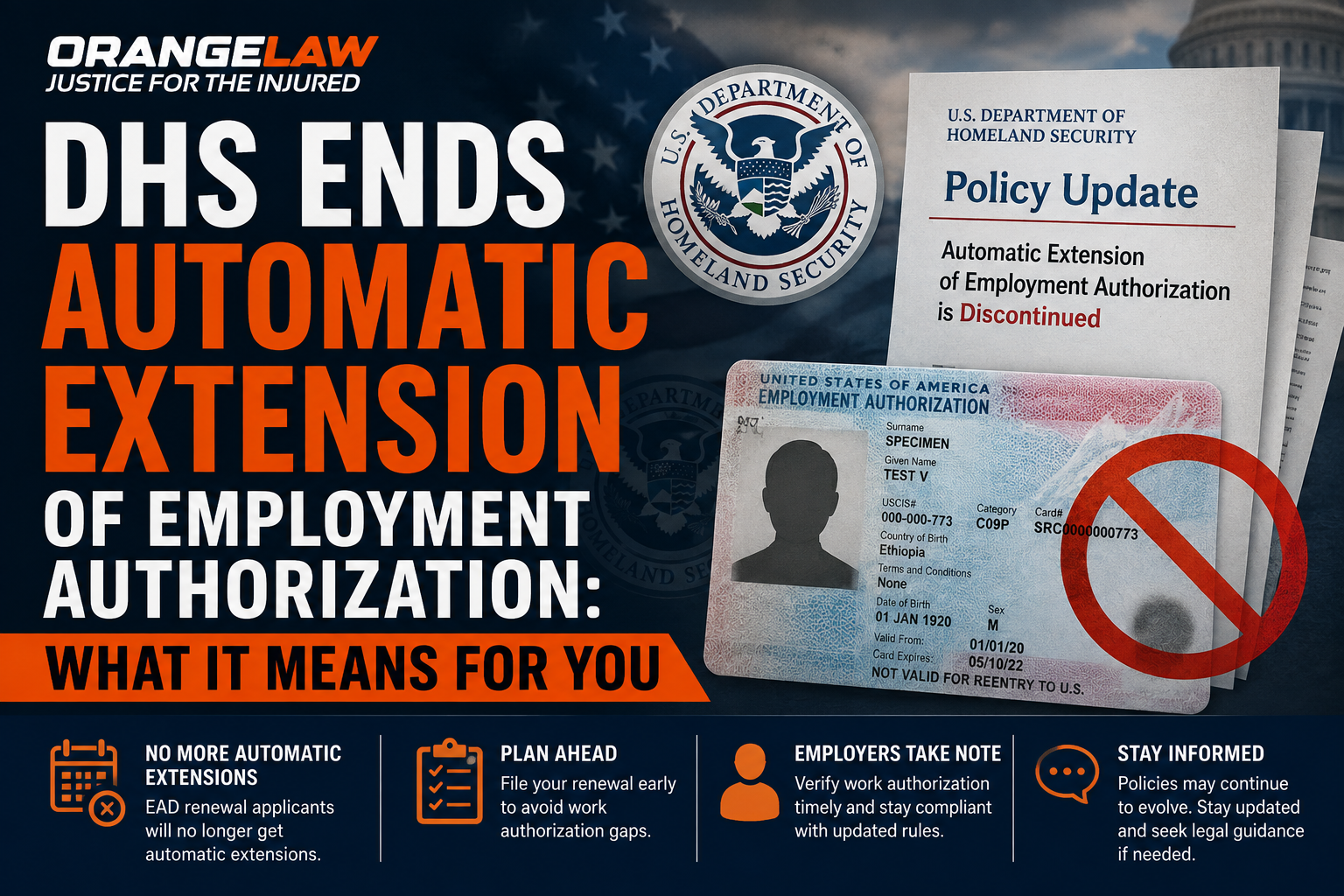
If you’re a noncitizen worker and you renew your work permit every year, there’s an important change you need to know about. DHS has ended the automatic extension of employment authorization for most EAD renewal applications filed on or after October 30, 2025.
In simple terms, this means the safety net that previously allowed many workers to continue working while USCIS processed their EAD renewal is no longer available in most cases. So, if your renewal takes longer than expected, you may not be able to keep working after your current work authorization expires.
Now, you might be wondering: What exactly changed? Who does this affect? And what should you do if your work permit is about to expire?
Don’t worry-we’ll break it all down. In this guide, we’ll explain what DHS changed, why the government made this decision, who may be affected, and, most importantly, what steps you can take to avoid unnecessary problems with your employment.
What Was the Automatic EAD Extension Policy?
Before this change, if you held a valid Employment Authorization Document (Form I-766) and filed a timely renewal application (Form I-765) in the same category, USCIS automatically extended your work authorization – for up to 540 days – while your renewal sat in the processing queue. This buffer existed because EAD renewals could only be filed up to 180 days before expiration, yet USCIS processing times often ran longer than that. The automatic extension kept eligible workers legally employed and helped employers avoid unnecessary I-9 headaches during the gap.
What Changed: DHS Ends Automatic Extension of Employment Authorization
On October 29, 2025, DHS announced an interim final rule (IFR) titled “Removal of the Automatic Extension of Employment Authorization Documents,” published in the Federal Register the next day. The rule took effect immediately.
Effective Date and Key Details
- Effective date: October 30, 2025
- Who it applies to: Applicants who file an EAD renewal on or after October 30, 2025
- What’s grandfathered: Renewal applications filed before October 30, 2025 keep their existing 540-day automatic extension and are unaffected
- Comment period: DHS accepted public comments on the rule through December 1, 2025, even though the rule was already in force
In practice, this means that once your renewal application is filed under the new rule, your EAD stops being automatically valid the moment it expires – your employment authorization only continues once USCIS actually approves the renewal.
Who Is Affected by This Change?
The new rule touches a broad range of EAD categories, including:
- Asylum applicants and asylees
- Individuals with pending adjustment-of-status applications (Form I-485, category C09)
- Refugees
- Applicants granted or seeking withholding of removal
- Several other renewal-based EAD categories
If your EAD renewal is tied to any of these categories and you file on or after October 30, 2025, you no longer get an automatic bridge in coverage while USCIS reviews your case.
Exceptions to the New Rule
Not every category is impacted. DHS carved out a few important exceptions:
- TPS-based EADs: Automatic extensions for Temporary Protected Status beneficiaries under INA § 244 remain unaffected
- Extensions already in place: EADs automatically extended before October 30, 2025 continue under the old rule
- Statutory or Federal Register extensions: Any extension separately provided by law or a specific Federal Register notice still applies
If you’re unsure whether your category falls into an exception, it’s worth confirming directly with USCIS or an immigration attorney before assuming you’re covered either way.
What This Means for Employers
Employers now face greater compliance risk with I-9 reverification. Once an employee’s EAD expires and no automatic extension applies, that worker is technically not authorized to work – even if a renewal application is pending. HR and compliance teams should:
- Track EAD expiration dates for every affected employee closely
- Reverify work authorization before the expiration date, not after
- Understand that continuing to employ someone with an expired EAD and no active extension can create legal exposure
- Build in extra lead time for calendar reminders, since processing delays no longer come with a built-in cushion
What This Means for Employees and Applicants
For workers, the practical impact is a real risk of an employment gap if a renewal isn’t approved before the current EAD expires. USCIS itself houston recommends aliens seek a timely renewal of their EAD by properly filing a renewal application up to 180 days before their EAD expires houston, and notes plainly that houston the longer an alien waits to file an EAD renewal application, the more likely they are to experience a lapse in work authorization.
Steps to Take If You’re Renewing Your EAD
- File as early as possible – submit your Form I-765 renewal the moment you’re eligible, up to 180 days before expiration.
- Track your case status – monitor your USCIS online account regularly for updates or requests for evidence.
- Talk to your employer early – give HR advance notice so they can plan for potential reverification timelines.
- Check for exceptions – confirm whether your category (such as TPS) still qualifies for an automatic extension.
- Consult an immigration attorney – if your renewal is delayed close to your expiration date, professional guidance can help you understand your options and any risk of a work gap.
Frequently Asked Questions
Does DHS ending automatic extension of employment authorization affect EADs filed before October 30, 2025?
No. Renewal applications filed before that date keep the existing 540-day automatic extension.
Are TPS-based EADs affected by this rule?
No. Automatic extensions tied to Temporary Protected Status under INA § 244 are excluded from this change.
How early should I file my EAD renewal now?
USCIS recommends filing up to 180 days before your current EAD expires to reduce the risk of a work authorization gap.
Can my employer let me keep working if my EAD expires while a renewal is pending?
Generally, no — without an active automatic extension or approved renewal, the employee is not considered authorized to work, which creates compliance risk for employers.
Conclusion
The bottom line is pretty straightforward: DHS has ended the automatic extension of employment authorization for most EAD renewals filed on or after October 30, 2025. So, employees and employers now need to plan ahead and pay closer attention to work permit expiration dates. While this is separate from PERM Processing Time, understanding related immigration timelines can help employees and employers better plan for potential delays.
If you’re an employee renewing your EAD, it’s a good idea to file your renewal as early as you can and keep an eye on the status of your application. On the employer side, make sure you’re tracking your employees’ work authorization expiration dates so there are no surprises.
At the end of the day, the best way to avoid an unexpected gap in employment is to stay ahead of the deadlines, plan for possible processing delays, and regularly check the latest USCIS guidance. Honestly, a little extra planning can make a big difference when renewal processing takes longer than expected.