
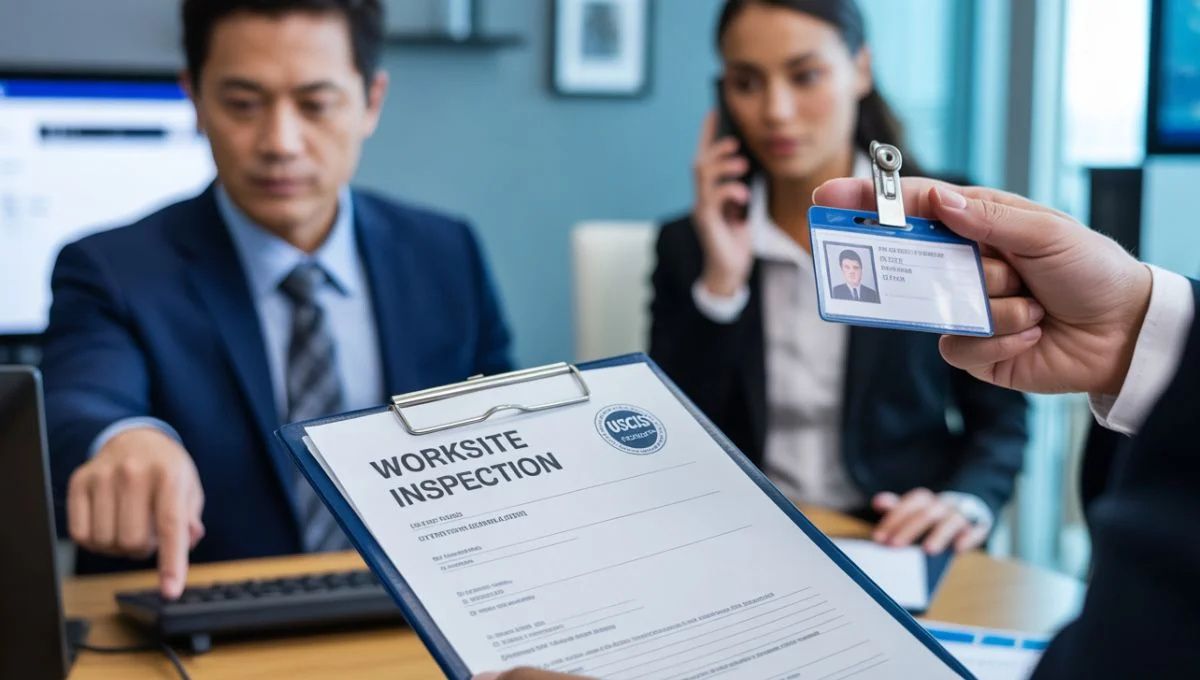
H-1B Home Office Site Visits: Why Remote Employees Should Be Prepared
Remote work has changed H-1B compliance. For years, USCIS site visits were mostly associated with traditional office locations, employer headquarters, and third-party client worksites. Today, many H-1B employees work from home full time or on a hybrid schedule. When an H-1B worker’s home address is listed as a worksite in the Labor Condition Application or H-1B petition, that home office may become part of USCIS compliance review.
USCIS conducts administrative site visits through its Fraud Detection and National Security Directorate, commonly known as FDNS. These visits are used to verify information submitted in immigration petitions and confirm that the sponsored worker is employed under the terms represented to the government. USCIS has stated that site visits may be used to verify employer operations, work locations, wages, job duties, and other petition details. In 2024, DHS also codified USCIS authority to conduct H-1B site visits, and refusal to comply with a site visit may result in denial or revocation of an H-1B petition involving workers performing services at the inspected location.
For H-1B employees, the idea of a government officer arriving at a home office can be stressful. Many workers are unsure whether they must answer questions, whether the officer can enter the home, whether they should provide documents, or whether they should call their employer first. The best response is calm, professional, and careful.
This article explains what H-1B home office site visits are, why they happen, what employees should do if USCIS knocks on the door, and how remote H-1B workers can reduce compliance risk before a visit occurs.
What Is a USCIS FDNS Site Visit?
A USCIS FDNS site visit is an administrative inspection used to verify information contained in an immigration filing. In the H-1B context, the officer may be checking whether the employer, job, work location, wage, job duties, and employee information match the approved H-1B petition and certified Labor Condition Application.
Site visits may be announced or unannounced. They may occur before a petition is approved, after approval, during an extension process, after an amendment, or when USCIS identifies a compliance question. They may happen at an employer’s office, a third-party client site, or a remote work location. USCIS guidance confirms that the Administrative Site Visit and Verification Program is used to verify information in certain immigration benefit requests and detect possible fraud or noncompliance.
The officer may ask questions about the employer, the employee’s job title, start date, duties, salary, work schedule, work location, supervisor, reporting structure, and whether the employee is actually performing the role described in the petition. The officer may also request documentation or take notes about the location.
For H-1B workers, the key point is this: a site visit is not automatically an accusation of fraud. Many site visits are routine compliance checks. However, inconsistent answers, inaccurate job details, unauthorized worksite changes, or refusal to cooperate can create serious problems for the employer and employee.
Why Would USCIS Visit an H-1B Employee’s Home?
USCIS may visit a home office if the home address is listed as a worksite in the H-1B filing or LCA. This has become more common as remote and hybrid work arrangements have expanded. Employers often list an H-1B worker’s home address when the employee works remotely from that location on a regular basis.
The purpose of the visit is typically to confirm that the employee is working where the employer said they would work. The officer may also want to verify that the employee’s job duties, wages, hours, and reporting structure match the petition.
A home office visit may also occur if USCIS has questions about the employer’s business, the authenticity of the job, the employee’s location, or whether the H-1B worker is properly supervised. In some cases, site visits are random. In other cases, they may be targeted based on data, prior filings, inconsistencies, or suspected compliance issues.
Remote work can raise special H-1B concerns because the H-1B program is location-specific. The LCA is tied to the area of intended employment. If an H-1B worker moves to a new home, begins working from a different state, or changes from office-based work to remote work, the employer may need to review whether a new LCA posting, new LCA, or amended H-1B petition is required.
What Should an H-1B Employee Do When USCIS Knocks?
If a USCIS or FDNS officer comes to your home, stay calm. Do not panic, argue, hide, or provide false information. A professional and careful response is usually the best approach.
First, ask the officer to identify themselves. You may ask for a business card, badge information, agency identification, and the reason for the visit. You can write down the officer’s name, title, phone number, email address, and agency.
Second, contact your employer immediately. Most H-1B petitions are employer-sponsored, and the employer is responsible for the petition and LCA compliance. Let your HR department, immigration contact, manager, or company legal team know that USCIS is at your home. If your employer has immigration counsel, ask whether counsel can join by phone.
Third, answer basic factual questions truthfully. If the officer asks about your job title, employer, work location, start date, salary, supervisor, job duties, or work schedule, your answers should be accurate and consistent with the H-1B petition. Do not guess if you do not know. It is better to say you need to confirm than to provide incorrect information.
Fourth, do not volunteer unnecessary information. Answer the question asked, but do not speculate or provide unrelated details. A site visit is a compliance verification. Extra commentary can create confusion, especially if the employee is nervous.
Fifth, do not sign anything you do not understand. If the officer asks you to sign a statement, document, or confirmation, ask to review it with your employer or attorney first. Signing inaccurate or misunderstood information can create immigration consequences.
Can USCIS Enter an H-1B Employee’s Home?
A home is not the same as a public office lobby or reception area. If a government officer appears at a private residence, the employee should be respectful but careful. The employee can ask why entry is being requested and whether the officer has a warrant or written authority.
Because home entry can raise legal and privacy issues, employees should contact the employer and legal counsel immediately. Do not physically block an officer or escalate the situation, but do not assume that every request must be granted without review.
In many cases, the officer may be able to conduct the visit at the doorway, by phone, or after coordinating with the employer. The officer may ask to confirm that the worker is present and working at the address. If the officer requests to photograph the work area or inspect the home office, the employee should involve the employer and counsel before agreeing whenever possible.
The safest practical rule is: be polite, verify identity, contact the employer, answer truthful basic questions, and avoid granting broad access or providing documents without guidance.
What Questions Might USCIS Ask During a Home Office Site Visit?
During an H-1B home office site visit, the officer may ask questions designed to confirm the petition details. These questions may include:
What is your full name?
Who is your employer?
What is your job title?
When did you start working for the employer?
What are your daily job duties?
Who is your supervisor?
Where does your supervisor work?
How often do you communicate with your supervisor?
What is your work schedule?
What is your salary?
Do you work from this home address full time or part time?
Do you work from any other location?
Have your job duties changed since the H-1B was filed?
Do you work at a client site?
Do you manage anyone?
What tools, systems, or software do you use for work?
How does your employer track your work?
The officer may also ask about the employer’s business, number of employees, office locations, and what the company does. If the employee does not know detailed company information, it is acceptable to say that HR or the employer representative can provide that information.
The most important thing is consistency. Your answers should match the H-1B petition, LCA, offer letter, pay records, and actual work arrangement. If you recently moved, changed duties, changed supervisors, changed salary, or changed worksites, tell your employer immediately because the company may need to evaluate whether an amended filing is required.
What Documents Should H-1B Remote Employees Keep Accessible?
H-1B employees working from home should keep important immigration and employment documents organized. This does not mean you should hand over documents without employer or counsel involvement, but having records available can help you answer questions accurately.
Useful documents may include your H-1B approval notice, most recent I-94, passport biographic page, visa stamp if applicable, employment offer letter, recent pay stubs, job description, employer contact information, attorney contact information, and a copy of the LCA posting notice if your employer provided one.
Employees should also know the basic information in their H-1B petition. You should understand your job title, employer name, work location, salary, supervisor, work schedule, and general job duties. If you are unsure what was filed, ask your employer or immigration counsel before a problem occurs.
Remote employees should keep their employer informed of any address change. Moving from one home office to another can be legally significant for H-1B compliance. Even moving within the same city can matter depending on the LCA and worksite rules. Moving to another metropolitan area or state almost always requires legal review.
What Employees Should Not Do During a Site Visit
Do not lie. False statements can create serious immigration consequences for both the employee and employer. If you do not know the answer, say that you do not know or need to confirm.
Do not guess about legal or technical details. If the officer asks about the company’s H-1B filing history, corporate structure, revenue, client contracts, or immigration strategy, it is reasonable to refer those questions to the employer.
Do not provide personal devices, confidential company files, tax records, client information, or internal documents without speaking with your employer or counsel. Some information may be private, privileged, confidential, or outside the scope of the visit.
Do not sign a written statement unless you fully understand it and have had a chance to review it with counsel. A statement that appears simple can create problems if it is incomplete or inaccurate.
Do not ignore the visit. Refusing to cooperate without legal guidance can create risk. USCIS guidance notes that refusal to comply with a site visit may result in denial or revocation of an H-1B petition connected to the inspected location.
Do not delay notifying your employer. The employer needs to know about the visit immediately so it can respond, provide documents, and correct any misunderstanding.
Why Work Location Accuracy Matters for H-1B Remote Employees
H-1B compliance depends heavily on work location. The LCA identifies the place of employment and the wage area used to determine the required wage. If an employee works from a location not covered by the LCA or petition, the employer may have a compliance problem.
For example, if an H-1B employee was approved to work at the employer’s office in Dallas but later moves to a home office in another state, the employer may need to file a new LCA and amended H-1B petition before the move or within the legally permitted timeframe. If the worker’s home address was never disclosed, a USCIS site visit could reveal a mismatch.
Hybrid work also matters. If an employee works partly from home and partly from the office, both locations may need to be reviewed. If an employee works from a client site, that site may need to be listed and supported. If an employee travels or temporarily works from another location, the short-term placement rules may need to be evaluated.
Employees should never assume that remote work changes are informal. For U.S. workers, a remote work move may be mainly an HR issue. For H-1B workers, it can be an immigration compliance issue.
What If the Employee Moved and Did Not Tell the Employer?
If an H-1B employee moved and did not tell the employer, the employee should notify the employer immediately. Do not wait for a USCIS site visit. The employer needs to determine whether the new address is covered by the existing LCA or whether additional steps are required.
The next step depends on the facts. If the move is within the same area of intended employment, the employer may need to complete new notice posting at the new worksite but may not always need a new H-1B petition. If the move is outside the area of intended employment, a new LCA and amended petition may be required. If the employee has already been working from an unauthorized location, counsel should review the best corrective strategy.
Employees should also update their address with USCIS where required. Noncitizens generally have address reporting obligations, and failure to keep address information current can create additional problems.
The best practice is simple: before moving, ask HR or immigration counsel whether the move affects H-1B compliance.
What If the Officer Says the Employee Is Not at the Listed Worksite?
Sometimes a site visit happens when an employee is not home, is traveling, is at a company office, is working at a client site, or has a hybrid schedule. If USCIS cannot locate the worker at the listed worksite, it may create questions.
This does not automatically mean there is a violation. However, the employer and employee should be ready to explain the work arrangement clearly. If the employee works a hybrid schedule, the petition and LCA should support that arrangement. If the employee was temporarily away, documentation may help clarify the situation.
The employee should notify the employer if USCIS visited and they were unavailable. The employer may need to respond to the officer, confirm the work schedule, provide records, or explain the location arrangement.
How Employers Should Prepare H-1B Remote Workers
Although this article focuses on employees, employers play the central compliance role. Employers should train remote H-1B workers on what to do if USCIS visits a home office. Employees should know who to call, what information they can provide, and how to handle document requests.
Employers should maintain accurate Public Access Files, certified LCAs, H-1B petitions, pay records, job descriptions, worksite records, and proof of LCA notice posting. Employers should also track remote work locations and require employees to report address changes before they happen.
A written internal protocol can help. The protocol should identify the company contact for site visits, immigration counsel contact information, document request procedures, and instructions for employees. This is especially important for companies with distributed teams.
USCIS site visits can happen without advance notice, so preparation must happen before the knock on the door.
Practical Checklist for H-1B Employees Working From Home
H-1B remote employees should take these steps now:
Confirm that your employer has your current home work address.
Ask whether your home address is covered by the H-1B petition and LCA.
Know your official job title, salary, work schedule, and supervisor.
Keep your immigration documents organized.
Save HR and immigration counsel contact information.
Tell your employer before moving to a new address.
Tell your employer before changing work locations or client sites.
Make sure your actual job duties match your H-1B role.
Do not perform unauthorized work outside the approved role.
Report any USCIS visit to your employer immediately.
This checklist is not a substitute for legal advice, but it can help remote H-1B workers reduce avoidable risk.
Frequently Asked Questions About H-1B Home Office Site Visits
Can USCIS visit my home if I work remotely on H-1B?
Yes, it is possible, especially if your home address is listed as a worksite in the H-1B petition or LCA. Home office visits may occur when USCIS needs to verify the work location and employment terms.
Is a USCIS home office site visit the same as an ICE raid?
No. A USCIS FDNS site visit is generally an administrative compliance inspection related to an immigration petition. It is not the same as an ICE enforcement raid. However, employees should still respond carefully and contact the employer or attorney immediately.
Do I have to answer every question?
You should answer basic factual questions truthfully, but you do not need to guess or answer questions outside your knowledge. Questions about company records, immigration filings, or legal strategy should be referred to your employer or counsel.
Should I let the officer inside my home?
Because a home is a private residence, you should be careful. Ask for identification, ask why entry is requested, and contact your employer or attorney immediately. Do not be rude or obstructive, but do not grant broad access without guidance if you are unsure.
What if my home address changed?
Tell your employer immediately. A home address change can affect H-1B compliance because the LCA and petition are tied to work locations. Your employer may need to review whether a new LCA, new posting, or amended H-1B petition is required.
Can USCIS revoke my H-1B after a site visit?
A site visit can lead to further review if USCIS finds inconsistencies or noncompliance. USCIS guidance states that refusal to comply with a site visit may result in denial or revocation of certain H-1B petitions connected to the inspected location.
What if my job duties changed?
Tell your employer immediately. Significant changes in job duties, worksite, salary, or role may require immigration review and possibly an amended H-1B petition.
Should I give the officer copies of my documents?
Do not provide documents casually. Ask what is being requested and contact your employer or counsel. Some document requests should be handled by the employer, not the employee personally.
What if I am not home when USCIS visits?
Notify your employer immediately if you learn that USCIS visited. The employer may need to contact the officer and explain your work schedule, hybrid arrangement, travel, or temporary absence.
Should I call an immigration attorney?
Yes, especially if the officer asks detailed questions, requests entry, asks for documents, asks you to sign something, or raises concerns about your work location, job duties, or status.
Final Takeaway
H-1B home office site visits are an important compliance issue for remote employees and employers. As remote work becomes more common, USCIS may verify home office locations listed in H-1B petitions and LCAs. For employees, the best approach is to stay calm, verify the officer’s identity, contact the employer immediately, answer truthful basic questions, avoid guessing, and avoid signing or providing documents without guidance.
For employers, the best approach is proactive compliance. H-1B petitions, LCAs, job duties, wages, worksites, and remote work arrangements should match reality. If an employee moves or changes work locations, the employer should evaluate whether additional immigration steps are required before USCIS identifies a problem.
Call Orange Law for H-1B Site Visit Guidance
If you are an H-1B employee working from home or an employer sponsoring remote H-1B workers, Orange Law can help you prepare for USCIS site visits and reduce compliance risk.
Our team can review H-1B petitions, LCAs, remote work arrangements, Public Access Files, employee address changes, amendment requirements, and site visit response plans.
Contact Orange Law today to speak with an immigration attorney about H-1B home office site visits, remote work compliance, and USCIS site visit preparation.