
What Is the New $750 Expedited B1/B2 Visa Interview Fee?
The U.S. visitor visa process is changing in an important way for certain applicants in 2026. Beginning July 1, 2026, the U.S. Department of State is introducing a temporary $750 expedited visa interview appointment fee for certain B1/B2 visitor visa applicants who want a faster interview appointment at selected U.S. embassies and consulates. This new fee is designed for applicants seeking a U.S. tourist visa, U.S. business visa, B1 visa, B2 visa, or combined B1/B2 visitor visa who are facing long appointment wait times and need a faster interview date.
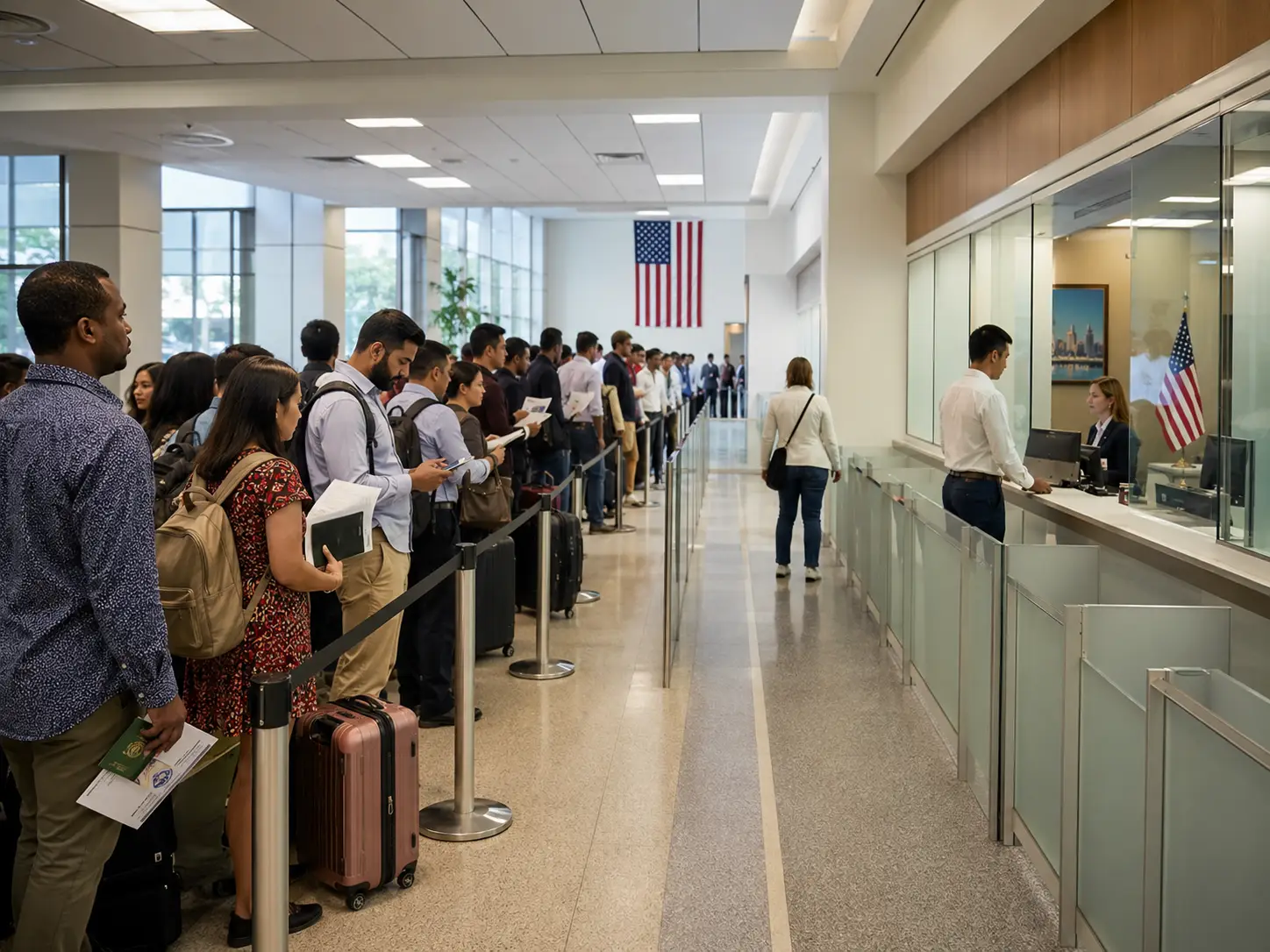
For many foreign nationals, one of the most difficult parts of applying for a U.S. visitor visa is not completing the DS-160 application or gathering supporting documents. The biggest challenge is often finding an available U.S. visa interview appointment. In many countries, B1/B2 visa appointment wait times can be extremely long, sometimes stretching for months. These delays can interfere with business meetings, tourism plans, family visits, medical travel, conferences, weddings, graduations, and other time-sensitive travel needs.
The new $750 expedited B1/B2 visa appointment fee creates a paid option for eligible applicants who want a faster interview appointment. However, applicants should understand that this fee is not a fee for visa approval. It is only a fee for faster interview scheduling, where available. Paying the $750 expedited appointment fee does not guarantee that a visitor visa will be issued, does not make an applicant automatically eligible, and does not change the legal requirements for receiving a B1/B2 visa.
At Orange Law, we know that U.S. visa delays can create serious stress for individuals, families, and businesses. A delayed visitor visa interview can affect travel plans, professional opportunities, personal obligations, and urgent family matters. This article explains what the new $750 expedited visa interview fee means, who it may apply to, what it does not cover, and how applicants should prepare before deciding whether to pay for a faster U.S. visa appointment.
When Does the New Expedited Visa Interview Fee Start?
The new expedited B1/B2 visa interview fee is scheduled to begin on July 1, 2026. The program is temporary and is expected to run through December 31, 2026, unless the U.S. government later extends, changes, or ends the program. Because this is a temporary pilot-style program, applicants should not assume that the paid expedite option will always be available.
The limited timeframe is important. Applicants who are planning U.S. travel during the second half of 2026 should check appointment availability early and monitor official visa scheduling systems. The $750 expedited appointment option may be useful for certain travelers, but it should not replace early planning. Even if an applicant is willing to pay the fee, expedited appointments may be limited, and not every U.S. embassy or consulate may participate.
Applicants should also remember that visa appointment availability can change quickly. A post that has expedited appointments one week may not have the same availability later. Local consular staffing, appointment demand, cancellations, national holidays, security conditions, and operational changes can all affect appointment scheduling. Anyone considering the $750 expedited visa interview fee should review the official scheduling system before making travel commitments.
Who Can Use the $750 Faster U.S. Visa Appointment Option?
The new $750 fee is focused on certain B1/B2 visitor visa applicants. A B1 visa is generally used for temporary business visitor travel. This can include attending business meetings, conferences, trade shows, negotiations, consultations, or other temporary business-related activities that do not involve unauthorized employment in the United States. A B2 visa is generally used for tourism, vacations, family visits, medical treatment, and other temporary personal travel. Many applicants apply for a combined B1/B2 visa, which may allow travel for both business and tourism purposes depending on the circumstances.
This expedited appointment option may be especially relevant for applicants who need to travel to the United States for time-sensitive reasons but cannot find a regular appointment soon enough. Business travelers may need to attend an important conference, client meeting, trade event, or negotiation. Family visitors may need to attend a wedding, graduation, funeral, or family gathering. Tourists may have fixed travel dates. Medical visitors may need to attend a consultation or receive treatment within a specific timeframe.
However, not every applicant will be able to use this option. The expedited appointment fee will only be available at selected U.S. embassies and consulates. It will also depend on whether expedited appointment slots are available at the time the applicant is scheduling. If a consular post is not participating or has no expedited slots available, the applicant may not be able to pay the $750 fee for a faster appointment.
Applicants should not assume that paying more always creates immediate availability. The government may limit the number of expedited appointments at each post. This means that faster appointment slots may be offered in limited quantities. The earlier an applicant checks the official scheduling system, the better positioned they may be to evaluate available options.
Does the $750 Fee Guarantee Visa Approval?
No. The $750 expedited B1/B2 visa interview fee does not guarantee visa approval. This is one of the most important points applicants must understand before paying the fee. The fee is only for expedited interview scheduling. It does not guarantee that the U.S. visitor visa will be issued.
A consular officer will still decide whether the applicant qualifies for a B1/B2 visa under U.S. immigration law. The officer may review the applicant’s purpose of travel, financial ability, employment, family situation, travel history, prior visa history, ties to the home country, and intent to return after a temporary stay in the United States. A faster interview does not reduce the legal standard for approval.
The fee also does not guarantee a favorable interview. Applicants must still answer questions clearly and truthfully. They must still present a credible temporary travel purpose. They must still show that their visit fits within the B1 or B2 category. They must still avoid misrepresentation. They must still satisfy the consular officer that they are eligible for the visa.
The $750 fee also does not speed up administrative processing. If a consular officer places the application into administrative processing after the interview, the expedited appointment fee will not accelerate that review. Administrative processing can delay visa issuance even after an interview has taken place. Applicants should therefore avoid assuming that a faster interview automatically means faster passport return or faster travel approval.
Which Visa Categories Are Covered?
The expedited appointment fee is focused on B1/B2 visitor visa applicants. It is not intended for all U.S. visa categories. Applicants should be careful not to confuse this new fee with other visa processes.
This fee does not generally apply to H-1B specialty occupation visas, L-1 intracompany transfer visas, F-1 student visas, J-1 exchange visitor visas, H-4 dependent visas, K-1 fiancé visas, immigrant visas, green card consular processing, employment-based immigrant visas, or family-based immigrant visas. The new $750 fee is specifically connected to faster interview scheduling for certain visitor visa applicants.
This distinction matters because many people search online for “faster U.S. visa appointment,” “expedited visa interview,” or “new U.S. visa fee 2026” without realizing that different visa categories have different procedures. A person applying for a student visa, work visa, or immigrant visa should not assume that this B1/B2 expedited appointment fee applies to their case.
Applicants should verify their visa category before paying any fee. If the purpose of travel is tourism, family visit, short-term business activity, or medical travel, the B1/B2 category may be relevant. If the purpose is employment, long-term study, immigration, or permanent relocation, another visa category may be required.
How the Expedited B1/B2 Visa Appointment Process Works
The basic B1/B2 visa application process usually begins with completing the DS-160 nonimmigrant visa application. The DS-160 is the online application form used by most nonimmigrant visa applicants. It asks for personal information, passport details, travel plans, employment history, education history, prior U.S. travel, family information, security-related questions, and other important details.
After completing the DS-160, the applicant usually pays the standard nonimmigrant visa application fee, commonly known as the MRV fee. The applicant then creates or accesses a visa scheduling profile through the appropriate appointment system for the country where they are applying. From there, the applicant schedules a visa interview appointment at a U.S. embassy or consulate.
Under the new expedited option, eligible B1/B2 applicants at selected posts may be able to choose a faster interview appointment by paying an additional $750 fee. The goal of the program is to offer an interview appointment within a shorter timeframe, potentially within ten business days, depending on availability. However, availability is not guaranteed, and expedited slots may be limited.
Applicants should make sure their DS-160 is accurate before selecting an expedited appointment. They should also confirm that their passport is valid, their travel purpose is clear, and their supporting documents are ready. Because expedited appointments may occur quickly, applicants should not pay for a faster appointment unless they are prepared to attend the interview.
Regular Visa Fee vs. New Expedited Appointment Fee
The $750 expedited appointment fee is separate from the regular visa application fee. This means that applicants must still pay the standard B1/B2 visa application fee, and the $750 expedite fee is an additional cost.
For one applicant, the added cost may be significant. For a family, the total cost can become much higher. For example, if multiple family members each need a B1/B2 visa interview and each chooses the expedited appointment option, the additional expedite fees may add up quickly. A family of four could face $3,000 in expedited appointment fees alone, not including regular visa application fees or other travel expenses.
Because of this, applicants should carefully consider whether the expedited appointment option is worth the cost. If the travel is flexible, it may be more practical to wait for a regular appointment. If the travel is urgent, fixed, or connected to an important business or family event, the expedited option may be worth considering.
Applicants should also think about the risk of denial. Paying the $750 fee does not make a weak application stronger. If an applicant has unresolved eligibility concerns, prior refusals, unclear travel plans, insufficient ties, or possible inadmissibility issues, paying for a faster appointment may simply lead to a faster refusal. In those situations, legal review before the interview may be a better investment.
Why This Matters for U.S. Tourist Visa Applicants
The new expedited appointment fee may be especially important for B2 tourist visa applicants. Many people apply for a U.S. tourist visa to visit family, take a vacation, attend a wedding, attend a graduation, receive medical care, or participate in a short-term personal event. When appointment wait times are long, these plans can become difficult or impossible.
For example, a family member may want to attend a wedding in the United States but may not be able to find a regular visa appointment before the event date. A parent may want to attend a child’s graduation but face a wait time that extends past the ceremony. A traveler may have planned a vacation but cannot secure an interview in time. In these situations, a faster U.S. visa appointment may be valuable.
However, B2 tourist visa applicants should remember that a strong reason for travel does not guarantee approval. The applicant must still show that the trip is temporary and that they intend to return home after the visit. The consular officer may consider employment, family responsibilities, financial stability, prior travel, and overall circumstances.
Tourist visa applicants should also be cautious about booking nonrefundable flights or hotels before the visa is issued. Even with an expedited interview, the visa can be refused or delayed. A faster appointment may improve timing, but it does not remove uncertainty from the process.
Why This Matters for Business Visa Applicants
The new $750 expedited appointment fee may also be important for B1 business visitor visa applicants. Businesses often need foreign nationals to travel to the United States for meetings, conferences, trade shows, consultations, contract discussions, or short-term business events. When visitor visa appointment wait times are too long, companies may lose opportunities or face operational delays.
A faster B1 visa appointment may help business travelers attend important events on time. For companies, the expedited option may provide a practical solution when travel is time-sensitive. However, businesses should make sure that the planned activity is appropriate for the B1 visa category.
A B1 visa is not a work visa. It generally does not authorize employment in the United States. A visitor should not use a B1 visa to perform productive work for a U.S. employer, receive U.S. wages, fill a labor role, or engage in activities that require a work-authorized visa. If the person needs to work in the United States, a different visa category may be required.
Business travelers should be ready to explain the purpose of the trip, the employer or company relationship, the expected length of stay, who is paying for the trip, and why the activity is temporary. Supporting documentation may include invitation letters, conference registration, meeting agendas, company letters, or evidence of employment abroad. These documents should be accurate and consistent with the DS-160 and interview answers.
What Applicants Should Prepare Before Paying the Fee
Before paying the $750 expedited B1/B2 visa appointment fee, applicants should make sure they are fully prepared. A faster interview can be helpful only if the applicant is ready to attend and present a clear case.
First, applicants should review the DS-160 carefully. The DS-160 should be accurate, complete, and consistent. Mistakes about prior visa refusals, U.S. travel history, employment, education, family members, immigration petitions, or security-related questions can create serious problems. Even an accidental error can cause confusion during the interview.
Second, applicants should confirm that their travel purpose matches the B1 or B2 visa category. A person traveling for tourism, family visits, medical treatment, or temporary personal reasons may fall under B2. A person traveling for temporary business meetings, conferences, consultations, or negotiations may fall under B1. If the purpose is employment, full-time study, or long-term residence, the applicant may need a different visa.
Third, applicants should prepare supporting documents. These may include proof of employment, business ownership documents, financial records, travel itinerary, invitation letters, event registration, medical appointment information, family event details, or evidence of ties to the home country. Not every document will be reviewed, but applicants should be prepared.
Fourth, applicants should review their prior immigration history. Prior visa denials, overstays, unauthorized employment, removal orders, criminal history, or misrepresentations can affect eligibility. Applicants with complicated histories should consider speaking with an immigration attorney before attending the interview.
Risks of Paying for an Expedited Visa Interview
The biggest risk of paying for an expedited visa interview is that the applicant may still be denied. The $750 fee does not guarantee approval, and it may not be refundable if the visa is refused. Applicants should not pay the fee with the belief that it buys a better outcome.
Another risk is that the applicant may not be ready for the interview. Because expedited appointments may occur quickly, applicants who rush the process may submit incomplete information, misunderstand the visa category, or fail to prepare for important questions. A rushed application can sometimes hurt more than it helps.
There is also a financial risk. The fee is substantial, especially for families or groups. Applicants should consider whether the travel need is urgent enough to justify the cost. If the trip can be postponed, a regular appointment may be more cost-effective.
Another risk is scams. Whenever a new expedited visa option becomes available, scammers may try to take advantage of applicants. Applicants should be cautious of anyone promising guaranteed approval, secret appointment access, or special connections with the embassy. No attorney, agent, consultant, or travel company can guarantee a U.S. visa approval.
Applicants should use official visa scheduling systems and avoid giving passport information, DS-160 details, or payment information to unverified third parties. If help is needed, applicants should work with qualified immigration professionals who provide honest guidance and do not make false promises.
Can You Still Request an Emergency Visa Appointment?
The $750 expedited appointment option is different from a traditional emergency visa appointment request. Some U.S. embassies and consulates allow emergency appointment requests for limited urgent situations, such as medical emergencies, funerals, urgent business needs, or other qualifying circumstances. The standards and procedures can vary by post.
Applicants should not assume that the paid expedited appointment option replaces emergency appointment procedures. In some situations, a person may still be able to request an emergency appointment through the regular process. However, emergency requests are not automatically approved. The applicant usually must explain the urgent need and provide supporting evidence.
The paid expedited appointment option may be broader than emergency appointment requests because it is based on paying for faster scheduling rather than proving an emergency. However, it is also limited by post participation and availability. Applicants should review both options carefully if their travel is urgent.
For applicants with a genuine emergency, it may be important to compare the emergency request process with the paid expedited option. Depending on the situation, one may be more appropriate than the other. Legal guidance may help applicants decide which path is best.
Common Mistakes B1/B2 Visa Applicants Should Avoid
One common mistake is assuming that a faster appointment means a stronger application. It does not. The consular officer will still evaluate the applicant under the same legal standards. A weak case does not become strong simply because the applicant paid for an expedited interview.
Another mistake is submitting an inaccurate DS-160. Applicants should not guess, hide prior refusals, misstate travel history, or provide inconsistent information. The DS-160 is a formal government application. Misrepresentations can have serious immigration consequences.
A third mistake is misunderstanding the B1 business visitor category. A B1 visa is not a work visa. Applicants should not use a visitor visa to perform employment in the United States. If the planned activity involves actual work, wages, or services for a U.S. company, another visa category may be required.
A fourth mistake is failing to explain the temporary nature of the trip. B1/B2 visas are for temporary visitors. Applicants should be ready to explain why they are traveling, how long they plan to stay, who will pay for the trip, and why they will return home.
A fifth mistake is relying too heavily on an invitation letter. An invitation letter may help explain the reason for travel, but it does not guarantee approval. The applicant must still independently qualify for the visa.
A sixth mistake is buying nonrefundable travel before receiving the visa. Even if the applicant pays for a faster interview, the visa may still be refused or delayed. Applicants should avoid making expensive final travel commitments before the visa is issued.
Should You Pay the $750 Expedited Appointment Fee?
Whether an applicant should pay the $750 expedited B1/B2 visa appointment fee depends on the situation. For some applicants, the fee may be worth it. For others, it may not be practical.
The fee may make sense if the applicant has urgent travel, a fixed event date, a business meeting that cannot be moved, a medical appointment, or a family obligation that requires faster scheduling. It may also make sense if regular appointment wait times are extremely long and the applicant is prepared for the interview.
The fee may not make sense if the travel is flexible, the applicant is not ready, the case has serious eligibility concerns, or the applicant cannot afford the risk of losing the fee. A person with a prior refusal or complicated immigration history should be especially cautious before paying for a faster appointment.
Applicants should ask themselves several questions before paying the fee. Is the selected U.S. embassy or consulate participating? Is an expedited appointment actually available? Is the travel urgent enough to justify the cost? Is the DS-160 accurate? Are the supporting documents ready? Are there prior immigration issues that should be reviewed? Is the applicant prepared to answer interview questions clearly and truthfully?
If the answer to any of these questions is uncertain, the applicant may benefit from legal guidance before moving forward.
How Orange Law Can Help With B1/B2 Visa Preparation
Orange Law assists individuals, families, professionals, and businesses with U.S. immigration matters, including visitor visa questions and consular preparation. For B1/B2 visa applicants, preparation can make a significant difference in how clearly the case is presented.
An immigration attorney can help evaluate whether the B1/B2 category is appropriate, review the purpose of travel, identify potential concerns, organize supporting documents, and prepare the applicant for common interview issues. Legal guidance can be especially important for applicants with prior visa refusals, prior overstays, complicated travel histories, criminal issues, employment-related questions, or uncertainty about whether the planned activity qualifies as business visitor travel.
Orange Law can also help businesses understand whether a visitor visa is appropriate for a planned trip or whether a work-authorized visa may be required. This distinction is important because using a B1 visa for activities that look like employment can create problems at the visa interview or at the U.S. port of entry.
The new $750 expedited appointment fee may help certain applicants obtain a faster interview, but it should be used strategically. The goal is not only to get an earlier appointment. The goal is to attend the interview with a well-prepared, accurate, and credible application.
Frequently Asked Questions About the New $750 Expedited Visa Interview Fee
Does the $750 expedited visa fee guarantee approval?
No. The $750 fee only applies to faster interview scheduling. It does not guarantee that a B1/B2 visa will be approved. A consular officer will still decide whether the applicant qualifies for the visa.
Is the $750 fee in addition to the regular visa application fee?
Yes. The expedited appointment fee is separate from the standard nonimmigrant visa application fee. Applicants should be prepared to pay the regular visa fee plus the additional expedite fee if they choose the faster appointment option.
Does the fee apply to all U.S. visa types?
No. The temporary expedited appointment fee is focused on certain B1/B2 visitor visa applicants. It does not generally apply to work visas, student visas, immigrant visas, or other visa categories.
Will the fee speed up administrative processing?
No. If the application is placed into administrative processing after the interview, the expedited fee does not speed up that review. The fee only relates to interview scheduling.
Can I use the expedited fee at any U.S. embassy or consulate?
No. The program is expected to be available only at selected U.S. embassies and consulates. Applicants should check the official visa scheduling system for the post where they are applying.
Should I pay the fee for a vacation?
It depends on your timeline and budget. If your travel is flexible, a regular appointment may be more cost-effective. If your travel dates are fixed and regular appointment wait times are too long, the expedited option may be worth considering.
Can a family pay the expedited fee together?
Each applicant may need to pay the expedited fee separately, depending on the appointment system and program rules. Families should calculate the total cost carefully before choosing the expedited option.
What happens if my visa is denied?
If the visa is denied, paying the expedited appointment fee does not change the decision. The fee is for appointment scheduling, not approval. Applicants with prior refusals or possible eligibility issues should consider legal review before applying.
Can an attorney guarantee approval if I pay the expedited fee?
No. No attorney, consultant, agent, or third party can guarantee U.S. visa approval. An attorney can help prepare and review the case, but the final decision belongs to the consular officer.
Is the expedited appointment option the same as an emergency appointment?
No. The paid expedited appointment option is different from an emergency appointment request. Emergency appointments usually require proof of an urgent qualifying reason, while the paid expedite option is based on availability at selected posts and payment of the additional fee.
Final Thoughts
The new $750 expedited B1/B2 visa interview fee is a major development for U.S. visitor visa applicants in 2026. For some applicants, it may provide a faster path to a U.S. visa interview at a selected embassy or consulate. This may be helpful for urgent business travel, family events, medical travel, tourism, and other time-sensitive visits.
However, applicants should understand the limits of the program. The fee does not guarantee visa approval. It does not speed up administrative processing. It does not waive eligibility requirements. It does not apply to every visa category. It does not replace careful preparation.
Before paying the $750 expedited appointment fee, applicants should review their travel purpose, visa category, DS-160 application, supporting documents, appointment availability, and any prior immigration concerns. A faster interview is only valuable if the applicant is prepared for the interview and eligible for the visa.
If you are applying for a B1 business visa, B2 tourist visa, or B1/B2 visitor visa and need guidance on your U.S. visa options, Orange Law can help you understand the process, prepare for your interview, and evaluate whether the new expedited appointment option makes sense for your travel needs.
Contact Orange Law today to speak with an immigration attorney about your U.S. visitor visa application, B1/B2 visa interview preparation, or expedited visa appointment questions.